How Long Does a Roof Last? Material & Lifespan Guide

Table of Contents
An average roof lasts 15 to 50 years depending on the material class and environmental exposure. To be precise, standard 3-tab asphalt shingles last 12 to 15 years, architectural asphalt shingles last 18 to 25 years, metal roofing systems last 40 to 70 years, and premium materials like natural slate or clay tile can exceed 100 years. However, a roof's actual timeline is rarely dictated by the calendar; it is governed by attic ventilation, installation quality, structural underlayment integrity, and local climate stressors.
ProductLifespans is an independent consumer education platform. Our editorial content is supported by advertising, and advertising does not determine our research findings or recommendations. All mechanical lifespans, structural failure diagnostics, and material timelines in this guide are derived from the National Roofing Contractors Association (NRCA) guidelines, ASTM/UL material testing standards, and recognized insurance actuarial data.
- Real-World vs. Warranty: A "30-year warranty" covers manufacturer defects, not weathering. The real-world expected lifespan of a standard architectural shingle roof is 18 to 25 years.
- Ventilation is Critical: Poor attic ventilation traps extreme heat, baking shingles from the underside. Calibrating your ventilation to the 1:300 rule can extend an asphalt roof's life by up to 25%.
- Underlayment Fails First: Even on 100-year clay tile or natural slate roofs, the waterproofing underlayment typically degrades and requires a full replacement between years 25 and 30.
Real-World Roofing Material Service Life
Lifespan timelines reflect expected real-world field performance, assuming proper NFVA attic ventilation and routine flashing maintenance.
Technical Degradation: The Mechanics of Roof Aging
Roofing longevity is not merely a function of time. It is a biological, chemical, and physical battle against the environment. To accurately gauge how long your roof will remain structurally sound, you must understand the specific scientific stressors acting upon the materials.
1. Photo-Oxidation (UV Degradation)
Asphalt shingles are bound together by bitumen, a sticky, petroleum-based hydrocarbon. When exposed to harsh ultraviolet (UV) radiation from the sun, photo-oxidation occurs. This chemical reaction breaks down the bitumen, causing its essential volatile oils to evaporate. As these oils vanish, the shingle loses its flexibility, becoming dry and brittle. Eventually, minor wind uplift or thermal shifting will cause these hardened shingles to micro-crack, letting water bypass the barrier.
2. Thermal Shock
Roofing materials expand in the heat and contract in the cold. Thermal shock happens during rapid, extreme temperature swings. For example, if a dark asphalt roof bakes in the afternoon sun reaching 140°F (60°C), and a sudden summer thunderstorm cools the surface to 70°F (21°C) in minutes, the material violently contracts. Over decades, this constant mechanical shearing stress breaks the adhesive bonds holding the protective ceramic granules to the asphalt mat.
3. Galvanic Corrosion
This is the primary killer of mixed-material systems. Galvanic corrosion is an electrochemical reaction that happens when two different types of metal (such as copper valley flashing and aluminum or steel panels) touch each other while wet. Rainwater acts as an electrolyte (a conductive liquid), allowing electrons to flow from one metal to the other. This process literally eats holes through the weaker metal barrier in a matter of years. Understanding how long a metal roof lasts heavily depends on preventing these dissimilar metal interactions.
Material Lifespan Comparison: Engineered vs. Reality
There is often a massive gap between what a roofing manufacturer's warranty claims and what a homeowner will actually experience. The table below contrasts manufacturer-engineered warranties against real-world field performance, referencing national industry testing standards like ASTM and UL.
| Material Class | Typical Warranty | Real-World Lifespan | Key Vulnerability Factor | Relevant Standard |
|---|---|---|---|---|
| 3-Tab Asphalt Shingles | 20–25 Years | 12–15 Years | Rapid photo-oxidation, wind uplift | ASTM D3462 |
| Architectural / Laminate Shingles | 30–50 Years | 18–25 Years | Delamination, attic heat trapping | ASTM D7158 |
| Standing Seam Metal (Steel/Alum) | 40–50 Years | 40–70 Years | Fastener gasket degradation | ASCE 7 |
| Clay / Concrete Tiles | 50–100 Years | 50–100 Years (Tiles) | Underlayment failure at Year 25–30 | UL 2218 |
| Natural Slate | 75–100+ Years | 75–150 Years | Flashing failure, freeze-thaw cracking | ASTM C406 |
Core Maintenance Protocols to Maximize Roofing Lifespan
Preventative maintenance shifts a roof from a reactive emergency expense to a predictable, planned capital expenditure. Following these specific protocols can extend the service life of an asphalt or metal roof by up to 25%.
- Calibrate Attic Ventilation (The 1:300 Rule): Poor ventilation voids manufacturer warranties because it bakes the shingles from the underside. Ensure your attic meets the Net Free Ventilating Area (NFVA) standard: 1 square foot of ventilation for every 300 square feet of attic floor space. This must be balanced perfectly—50% intake air (soffit vents under the eaves) and 50% exhaust air (ridge vents at the peak). This prevents the attic from reaching 150°F+, stopping early bitumen degradation.
- Low-Pressure Chemical Remediation: Moss and lichens use root-like structures called rhizoids to physically anchor into the mineral granules of asphalt shingles, feeding on the limestone filler inside. Apply a copper or zinc-based chemical wash approved by the Asphalt Roofing Manufacturers Association (ARMA). Never use a pressure washer, as high-pressure water instantly strips away the protective mineral granule layer, exposing the raw asphalt to direct UV destruction.
- Bi-Annual Flashing and Sealant Audit: Water rarely leaks straight through the center of a shingle. It infiltrates at terminations (edges) and penetrations (pipes and chimneys). Inspect step flashing (the L-shaped metal woven into shingles where they meet vertical walls) and rubber boot collars around plumbing vent pipes. UV rays crack rubber pipe boots in 10 to 15 years, long before the shingles fail.
Irreversible Failure Signals: When a Roof Must Be Replaced
Before investing heavily in spot repairs, property owners must be able to distinguish cosmetic weathering from active structural failure. If you observe the following signals, full replacement is generally required.
Critical Warning: Do not ignore spongy roof decking. If the roof surface feels soft or "bouncy" when walked upon, water has bypassed the underlayment and is rotting the structural plywood or oriented strand board (OSB) sheathing beneath. You cannot patch over this decay. Doing so risks a catastrophic structural collapse of the decking.
Signal 1: Systemic Granule Loss and Bald Spots
The colored, sand-like ceramic granules on asphalt shingles are not just for aesthetics; they are the armor that blocks UV radiation. When your gutters start filling with heavy amounts of these granules and your roof develops shiny, black "bald patches," the asphalt mat is fully exposed. Without granule protection, the remaining volatile oils will bake out rapidly, and the shingles will crack and leak within 12 to 24 months.
Signal 2: Severe Cupping, Clawing, or Curling
When the bottom edges of shingles curl sharply upward (cupping) or the centers bulge outward (clawing), the material has entirely lost its flexibility. Because these deformed shingles no longer sit flat, they act like small sails. They are highly susceptible to being ripped off during minor wind events, completely violating wind load safety standards (such as ASTM D3161).
Signal 3: Underlayment Rot on Lifetime Roofs
If you are exploring how long a slate roof lasts or dealing with clay tiles, you must separate the tile from the sub-roof. While natural slate and clay can survive over a century, the hidden organic or synthetic felt underlayment beneath them degrades after 25 to 30 years. If leaks develop while the tiles themselves are visually perfect, a "lift and re-lay" is mandatory. Roofing crews must carefully remove the historic tiles, replace the rotted underlayment and metal drip edges, and meticulously reinstall the original tiles.
The "30-Year Warranty" Myth
One of the most persistent misunderstandings in home maintenance is assuming that buying a "30-year architectural shingle" guarantees 30 years of leak-free performance. In reality, roofing warranties cover manufacturing defects (such as improper fiberglass matting from the factory), not normal wear-and-tear, storm damage, or premature failure due to poor attic ventilation.
If your roof fails at year 17 because your soffit vents were blocked by insulation, trapping heat and baking the shingles, the manufacturer will legally and rightfully deny the warranty claim. Always plan your capital budget around the Real-World Service Life (18 to 22 years for laminate shingles), not the marketing warranty.
"Longevity Lab" Pro-Tips: Advanced Engineering Interventions
If you are replacing a roof or planning a long-term capital improvement, insist on these technical specifications to maximize structural durability.
Reject the "Overlay" Option: Roofers may offer a cheaper quote to install new shingles directly over the old ones (an overlay). Do not accept this. While it saves immediate tear-off labor costs, a double layer traps excessive thermal energy, accelerating the aging of the new shingles by up to 50%. Furthermore, it prevents the installation of a self-adhering ice and water shield directly onto the bare wood decking, which is absolutely critical for preventing winter ice damming.
- Specify Synthetic Polyolefin Underlayment: Reject traditional 15-pound or 30-pound organic asphalt-saturated felt paper. Modern synthetic underlayments are woven from polypropylene and polyethylene plastics. They offer up to 20 times the tear strength of paper felt, do not absorb water, and will not rot or buckle if moisture briefly gets trapped under the shingles.
- Insist on Class 4 Impact Resistant Shingles (UL 2218): These premium shingles are reinforced with a polymer-modified asphalt (often SBS, a synthetic rubberizing agent). This rubberized matrix allows the shingle to act like a shock absorber. It can withstand the impact of a 2-inch solid steel ball dropped from 20 feet without cracking. In many regions, installing a Class 4 roof qualifies homeowners for substantial annual insurance premium discounts.
Addressing Evidence Gaps & Uncertainty
While the degradation of standard asphalt and metal is highly predictable, the roofing industry features two primary areas of low scientific certainty that consumers should view with caution.
Chemical Roof Rejuvenation Sprays
In recent years, bio-based oil treatments have hit the market, claiming to "rejuvenate" old shingles, restore their flexibility, and add 5 to 15 years to a roof's lifespan. While replacing lost oils makes theoretical chemical sense, there is a distinct lack of independent, peer-reviewed, multi-decade field studies proving these claims. Furthermore, many major tier-one shingle manufacturers do not officially endorse these sprays and warn they could impact existing warranties.
Synthetic Polymer Composite Shingles
Products engineered from recycled plastics and rubbers are frequently marketed with "50-year to lifetime" warranties. However, these materials have only been widely installed on homes for the last 15 to 20 years. Their long-term claims rely on accelerated laboratory weathering chambers (like Xenon Arc UV testing). While lab data is promising, we do not yet have a full 50-year dataset of real-world, localized field performance under complex environmental loads (similar to the historical data available when analyzing how long a thatched roof lasts using centuries of established building practices).
Frequently Asked Questions
What are the warning signs that my roof needs to be replaced immediately?
Immediate warning signs include active water stains spreading on interior ceilings, a soft or spongy feel when walking on the roof deck, systemic shingle curling or clawing across large areas, and massive quantities of ceramic granules accumulating in your gutters. Active leaks specifically originating near roof valleys or vertical structural walls strongly indicate compromised structural flashing barriers.
How much longer does a metal roof last compared to traditional asphalt shingles?
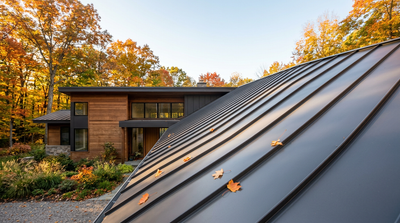
A standing seam metal roof routinely lasts 40 to 70 years, which is roughly two to three times longer than a standard architectural asphalt shingle roof (which lasts 18 to 25 years). While metal requires a significantly higher initial investment, it resists high winds and fire, and rarely needs to be replaced within a standard homeowner's tenure.
Does homeowner's insurance cover a roof that is over 20 years old?
Once a roof exceeds 15 to 20 years of age, many insurance carriers transition their coverage policies from Replacement Cost Value (RCV) to Actual Cash Value (ACV). Under ACV, if your roof is damaged in a storm, the payout is heavily depreciated based on the advanced age of the roof. This means the homeowner must pay the difference out-of-pocket. Additionally, some strict carriers may refuse to renew policies on homes with roofs over 20 years old unless they pass an independent, certified inspection.
Is it cheaper to repair a roof leak or replace the entire roof?
A localized repair, such as replacing a cracked rubber pipe boot or swapping out a few wind-damaged shingles, is far cheaper in the short term, typically costing between $300 and $1,500. However, if the roof has systemic damage, widespread granule loss, rotten structural decking, or is near the end of its 20-year lifespan, continuing to perform spot repairs is a costly mistake. Over a five-year period, it is much more economical to invest in a full replacement than to constantly pay for recurring emergency patches and interior water damage mitigation.
- ASTM International: Standards for tear strength, fastness, and wind-resistance properties in asphalt shingles. ASTM D3462 and ASTM D3161/D7158.
- Underwriters Laboratories (UL): Standard testing methodology for hail-resistance and impact ratings for roofing materials. UL 2218 Class 4 Standards.
- National Roofing Contractors Association (NRCA): Professional industry-accepted design practices, attic ventilation layouts (NFVA), and technical flashing details. NRCA Roofing Manual.
- American Society of Civil Engineers (ASCE): Structural wind design criteria and load calculations. ASCE 7 Minimum Design Loads.

David Mercer is the Lead Analyst at ProductLifespans.com. With over 10 years of hands-on experience reviewing hardware durability, home appliance mechanics, and total-cost-of-ownership economics, David specializes in translating complex manufacturer specs into practical repair-vs-replace guidance. When he isn't analyzing lifecycle data, he's testing consumer equipment durability in his home workshop.