How Long Does Salami Last in Fridge? Safety Guide

Table of Contents
If you are wondering exactly how long salami lasts in the fridge, the answer depends entirely on its curing method and packaging state. Unopened dry-cured salami lasts indefinitely in the refrigerator, though its quality, texture, and flavor profile are best when consumed within 6 months. Once opened, pre-sliced dry salami maintains peak safety and quality for 2 to 3 weeks, while a whole, opened dry salami chub can last up to 3 to 4 weeks.
Conversely, cooked or deli-sliced salami behaves like standard highly perishable deli meat. Per strict food safety standards established by the USDA, cooked salami lasts only 2 weeks unopened, and a mere 3 to 5 days in the refrigerator after opening. Understanding these distinct differences is critical to maximizing shelf life and avoiding dangerous foodborne pathogens.
Refrigerator Storage Limits for Salami
Timelines reflect USDA Food Safety and Inspection Service (FSIS) guidelines and industry manufacturer standards (Volpi, Creminelli, Applegate) for storage under 40°F (4.4°C).
- Moisture is the Enemy of Dry Cured Meats: Dry salami must be wrapped in breathable materials like parchment paper or beeswax wraps to prevent surface moisture trapping, which causes toxic mold.
- Cooked Salami Spoils Rapidly: Because it retains high moisture levels, cooked deli salami is highly susceptible to Listeria and must be eaten or discarded within 3 to 5 days of opening.
- White Mold is Safe, Colorful Mold is Not: Powdery white mold on a whole salami casing is a beneficial, safe fungus. However, any green, black, grey, or fuzzy mold on sliced meat means the entire portion must be discarded immediately.
ProductLifespans is an independent consumer education platform. Our editorial content is supported by advertising, and advertising does not determine our research findings or recommendations. All food safety timelines, microbiological parameters, and pathogen warnings in this guide are derived directly from the USDA Food Safety and Inspection Service (FSIS), the FDA Food Code, and clinical guidelines from the Centers for Disease Control and Prevention (CDC).
The Food Science of Salami Preservation: Dry-Cured vs. Cooked
To understand why different types of salami have drastically different lifespans in your refrigerator, we must examine their underlying biochemistry. The secret to shelf life lies in the curing chemistry and the microscopic environments within the meat.
1. Water Activity (aw)
Water activity is the single most important metric governing cured meat safety. It measures the amount of "free" or unbound water inside the food. Bacteria need free water to drink, swim, and multiply. Dry-cured salamis undergo an extended drying phase in climate-controlled rooms that reduces their water activity to 0.91 or lower (often down to 0.85). At this exceptionally low level, standard foodborne pathogens simply do not have enough water to survive or replicate.
In stark contrast, cooked or deli-sliced salamis retain high water activity to stay soft and juicy. This abundance of free water renders them highly perishable, similar to fresh beef or standard cold cuts.
2. Lactic Acid Fermentation (pH Level)
During the initial stages of making dry salami, producers introduce beneficial lactic acid bacteria. These bacteria feast on natural sugars in the meat and excrete lactic acid as a byproduct. This biological acidification drops the salami’s pH to an acidic range between 4.6 and 5.3. This highly acidic environment denatures (breaks down) the proteins of spoilage bacteria, acting as an invisible but powerful barrier against pathogenic colonization.
3. Curing Salts (Sodium Nitrite and Nitrate)
Traditional salamis rely on curing salts—specifically sodium nitrite (NaNO2) and sodium nitrate (NaNO3). These powerful compounds perform three critical jobs: they inhibit the germination of Clostridium botulinum spores (the bacteria that causes botulism), they fix the meat's characteristic red/pink hue, and they act as potent antioxidants to prevent lipid oxidation (the process where fat goes rancid).
It is important to note that "uncured" salamis—which utilize celery powder or sea salt as natural sources of nitrates—may provide less consistent chemical stability. Because the exact nitrate levels in celery powder fluctuate by batch, these natural products are more sensitive to minor temperature changes and often have a shorter practical shelf life.
4. The Primary Pathogen Threat: Listeria monocytogenes
When dealing with high-moisture deli salamis, Listeria monocytogenes is the primary concern. Unlike most pathogens that go dormant in the cold, Listeria is psychrotrophic. This is a scientific term meaning it can actively multiply at standard refrigeration temperatures, functioning perfectly well down to 29.3°F (-1.5°C). This chilling biological reality is exactly why cooked deli meats carry a strict, non-negotiable 3-to-5-day post-opening consumption window.
Step-by-Step Storage Protocols to Maximize Shelf Life
To maximize your salami's shelf life and prevent premature spoilage, you must control the microenvironment of your refrigerator. Proper handling can mean the difference between meat that lasts months versus meat that spoils in days.
Step 1: Choose the Right Wrapping Material
The Mistake: Wrapping dry-cured salami tightly in standard plastic wrap or placing it in an airtight plastic zipper bag. This traps transpired moisture (sweat) on the meat's surface. By artificially raising the local water activity, you invite hazardous mold growth.
The Protocol: Wrap dry-cured salami chubs in breathable butcher paper, parchment paper, or specialized beeswax wraps. This allows microscopic moisture to escape while protecting the meat from excessive airflow that would cause it to turn hard as a rock. Cooked or deli-sliced salami, however, does require airtight containment (such as its original resealable packaging or a clean, airtight glass container) to prevent it from drying out.
Step 2: Optimize Refrigerator Zoning
The Mistake: Storing opened salami in the refrigerator door or in high-humidity vegetable crispers. Refrigerator doors experience drastic temperature fluctuations every time you open them, accelerating lipid oxidation and bacterial growth. Crisper drawers trap high humidity, creating a swampy environment that encourages mold.
The Protocol: Store salami in the dedicated meat drawer (deli drawer) or on the coldest back shelf of the refrigerator. Ensure your refrigerator's thermostat is calibrated to maintain a consistent temperature between 34°F (1.1°C) and 38°F (3.3°C), much like the strict temperature controls required for preserving fresh ham safely.
Step 3: Implement Strict Hygiene Controls
Never slice a cured salami chub with a knife or on a cutting board that has been used for raw meats, unwashed produce, or bread. Cross-contamination introduces aggressive environmental spoilage organisms into the pristine, sterile interior of the meat block, drastically shortening its lifespan. Always wash your hands thoroughly with soap and water before handling sliced charcuterie.
| Salami Type | Ideal Wrap Material | Ideal Refrigerator Zone | Moisture Management Strategy |
|---|---|---|---|
| Dry-Cured Chub (Whole) | Parchment / Beeswax | Deli Drawer / Back Shelf | Breathable: Needs to release moisture |
| Pre-Sliced Dry Salami | Parchment + Loose Foil | Deli Drawer / Back Shelf | Semi-Breathable: Prevent extreme drying |
| Cooked / Deli Sliced | Airtight Glass / Ziploc | Coldest Shelf Area | Airtight: Retain moisture entirely |
How to Tell If Salami Has Gone Bad: Spoilage Indicators
Determining whether salami is safe to consume requires distinguishing between benign, natural cosmetic changes and true microbiological spoilage. Use this inspection checklist before consuming aged meat.
- Check for Visual Mold on Slices: Examine the flat faces of sliced meat. If you observe any green, black, grey, or fuzzy mold, discard the entire batch immediately.
- Check for Mold on Whole Casings: Examine the outside of an uncut chub. Powdery white mold (Penicillium nalgiovense) is beneficial and safe. Fuzzy green or black mold on the casing means the chub should be thrown away.
- Test the Surface Texture: Touch the surface of the meat. Freshly sliced salami should feel dry or slightly oily. If it feels slick, slimy, or noticeably sticky, lactic acid bacteria or yeast have overrun the meat. Discard it.
- Assess for Desiccation (Case Hardening): Look at the edges of the slices. If the outer rim has turned dark, hard, and leathery, it has suffered from desiccation. While not poisonous, it is past its peak quality and will be unpalatable.
- Perform an Olfactory Smelling Test: Salami naturally smells tangy and acidic. If the aroma shifts to a sharp vinegar, sour milk, or ammonia-like smell, it has spoiled. If it smells like wet cardboard, stale paint, or old oil, the fats have oxidized (gone rancid).
Do not attempt to scrape or cut toxic mold (green, grey, black, or fuzzy mold) off of sliced salami to eat the meat underneath. Unlike hard, dense cheeses, sliced meats are highly porous. Toxic mold mycelium (the microscopic root systems of the fungus) can easily penetrate deep into the sliced product, distributing dangerous mycotoxins throughout the meat even if the surface looks clean after trimming.
"Longevity Lab" Pro-Tips for Salami Preservation
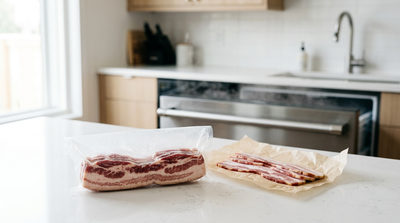
If you purchase bulk pre-sliced dry-cured salami, divide it into single-serving portion sizes and vacuum seal them using a home vacuum-sealing machine. By physically removing the oxygen, you dramatically halt both aerobic microbial growth and lipid oxidation. Vacuum-sealed dry salami can remain exceptionally fresh in the refrigerator for up to 3 months.
The Parchment-Foil Double-Wrap Method: For opened dry-cured chubs, you want to balance breathability with protection. First, wrap the cut end tightly in parchment paper to allow the meat to breathe and release moisture. Then, wrap the outer layer loosely in aluminum foil. The foil protects the meat from light exposure (which accelerates fat oxidation) and prevents it from absorbing odors from other foods inside your refrigerator.
Freezing Strategy for Surplus Salami: If you cannot consume your salami within the recommended timelines, you can freeze it to extend its lifespan by 1 to 2 months. To prevent freezer burn and structural degradation, wrap the salami tightly in parchment paper, place it inside a heavy-duty freezer bag, and squeeze out all excess air. This works well for both salami and cooked gammon. Note that the freezing and thawing process causes ice crystals to disrupt cell walls, which can slightly soften the texture of dry-cured meats. Always thaw salami slowly in the refrigerator over 24 hours rather than on the countertop.
Frequently Asked Questions
Can you freeze salami to extend its shelf life?
Yes. You can freeze both dry-cured and cooked salami for 1 to 2 months. Beyond this timeframe, the high fat content in salami can undergo slow lipid oxidation even when frozen, which results in stale off-flavors. Ensure you wrap the salami tightly to prevent contact with air and freezer moisture, and thaw it slowly in the refrigerator to preserve its texture.
Is it safe to eat dry salami left out of the fridge overnight?
Whole, unopened dry-cured salami is generally shelf-stable and safe if left out overnight due to its exceptionally low water activity and high acidity. However, pre-sliced dry salami, opened chubs, or cooked deli salami must be discarded if left out at room temperature for more than two hours. Ambient household temperatures allow moisture to accumulate on the meat's surface, triggering rapid bacterial growth.
What happens if you eat expired or spoiled salami?
Consuming spoiled salami exposes you to dangerous foodborne pathogens such as Listeria monocytogenes, Salmonella, or Staphylococcus aureus. This can lead to severe food poisoning. Symptoms range from mild nausea, vomiting, abdominal cramps, and diarrhea to life-threatening systemic infections, which are especially dangerous for pregnant women, the elderly, or immunocompromised individuals.
Why does my "uncured" salami spoil faster than standard salami?
"Uncured" salamis utilize natural sources of nitrates, such as celery powder or sea salt, rather than highly calibrated synthetic sodium nitrite. Because the concentration of natural nitrites can vary drastically between batches, these products often have less oxidative stability and weaker microbial defenses, making them much more sensitive to minor temperature fluctuations and resulting in a shorter practical shelf life.
Official Sources and Safety Standards
- USDA Food Safety and Inspection Service (FSIS): Official safety timelines and storage recommendations for cured, dry, and deli-sliced meats. USDA FSIS Guidelines on Jerky and Food Safety
- U.S. Food and Drug Administration (FDA): Food preservation codes, temperature parameters, and storage limits for ready-to-eat (RTE) deli foods. FDA Food Code - Chapter 3 (Food Protection)
- Centers for Disease Control and Prevention (CDC): Clinical guidelines and safety advisories regarding Listeria monocytogenes prevention in cold cuts and deli meats. CDC Listeria Prevention Resources

David Mercer is the Lead Analyst at ProductLifespans.com. With over 10 years of hands-on experience reviewing hardware durability, home appliance mechanics, and total-cost-of-ownership economics, David specializes in translating complex manufacturer specs into practical repair-vs-replace guidance. When he isn't analyzing lifecycle data, he's testing consumer equipment durability in his home workshop.