How Long Does Beef Last in the Fridge? USDA Rules

Table of Contents
According to USDA and FDA safety guidelines, raw ground beef and stew meat last 1 to 2 days in the fridge at or below 40°F (4°C). Raw steaks, roasts, and chops remain safe for 3 to 5 days, while cooked beef of any cut lasts 3 to 4 days.
Navigating food safety requires more than just looking at the expiration date or giving your meat a quick sniff. Understanding exactly how long beef lasts in the fridge means understanding the microscopic battles happening on your food, the chemical changes affecting its color, and how the microclimate inside your refrigerator either slows down or accelerates decay.
Key Takeaways for Beef Storage
- Cut type dictates lifespan: Ground beef spoils much faster than whole-muscle cuts like steaks because grinding mixes surface bacteria throughout the entire batch.
- Brown does not mean bad: A color shift from cherry red to dull brown is a natural chemical reaction to oxygen depletion, not an automatic indicator of bacterial rot.
- Pathogens are invisible: Dangerous bacteria that cause foodborne illness do not change the smell, texture, or look of your beef. Chronological time limits are your ultimate safety net.
Editorial Transparency: ProductLifespans is an independent consumer education platform. Our editorial content is supported by advertising, and advertising does not determine our research findings or recommendations. All biological timelines, pathogen storage protocols, and refrigeration temperature standards in this article are derived directly from the USDA Food Safety and Inspection Service (FSIS), the CDC, and the FDA Food Code.
Beef Cold Storage Timeline: Raw vs. Cooked Cuts
To safely manage your household groceries, you must treat different forms of beef as entirely different biological environments. A thick ribeye steak and a package of ground hamburger behave completely differently on a microscopic level.
| Beef Category | Cut Type Example | Safe Storage Limit (At or Below 40°F / 4°C) | Ultimate Action Required |
|---|---|---|---|
| Raw Ground & Comminuted | Ground beef, hamburger patties, raw meatballs | 1 to 2 Days | Cook or Freeze |
| Raw Small/Cubed Cuts | Stew meat, stir-fry strips, kabob meat | 1 to 2 Days | Cook or Freeze |
| Raw Whole-Muscle Cuts | Ribeye, strip steak, chuck roast, flank steak | 3 to 5 Days | Cook or Freeze |
| Cooked Beef (All Cuts) | Pot roast, grilled steak, beef stews, taco meat | 3 to 4 Days | Consume or Freeze |
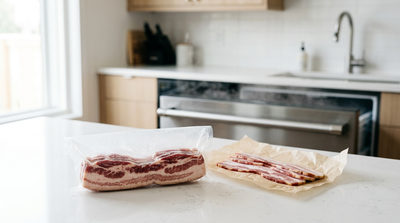
| Vacuum-Sealed Raw Beef | Wet-aged steaks, subprimals in original barrier film | 10 to 14 Days (Temp-dependent) | Cook, Freeze, or Open |
Why Ground Beef and Stew Meat Have Shorter Lifespans
You may wonder why a whole steak lasts up to five days, but the exact same meat ground into a burger only lasts two. The answer comes down to three factors: surface area, sterile interiors, and available moisture.
- Surface Area Multiplication: Grinding beef physically forces any bacteria present on the outside of the meat into the very center of the batch. By multiplying the exposed surface area, you are drastically increasing the colonization rate of bacteria.
- Sterile Interior of Steaks: A whole-muscle cut, like a dense chuck roast, remains completely sterile on the inside. Microbial contamination is restricted entirely to the outer exposed surfaces. When you sear a steak, you instantly kill the surface bacteria, rendering the interior safe to eat even if it is medium-rare.
- Water Activity (a_w): In food science, "water activity" refers to the amount of free moisture available for bacteria to drink and use for reproduction. When meat is ground or chopped into stew pieces, cellular structures break and release cellular fluids. This increases the available water on exposed surfaces, acting like an open buffet that accelerates microbial proliferation.
Note: If you are managing multiple proteins, these rules vary slightly across meat types. For comparative refrigeration limits, you can review our guides on how long ham lasts in the fridge and the cold storage limits for raw and prepared tuna.
The Science of Spoilage: Microbial Growth and Chemical Transitions
To prevent unnecessary food waste, it is vital to understand the difference between a natural chemical reaction and actual bacterial spoilage.
The Myoglobin Color Transition (A Visual Trap)
Many consumers incorrectly assume that when raw beef turns brown in the refrigerator, it has rotted. This is usually a harmless chemical shift involving a protein called myoglobin, which is responsible for the pigment in muscle tissue.
- Oxymyoglobin (Bright Red): When fresh beef is exposed to oxygen, the iron molecules in the myoglobin bind with oxygen (creating oxymyoglobin). This yields the bright, cherry-red color that consumers associate with freshness.
- Metmyoglobin (Dull Brown): In low-oxygen environments—such as the middle of a dense ground beef package or inside tightly wrapped plastic—the iron undergoes oxidation, turning into metmyoglobin. This turns the meat a dull, grayish-brown. Think of this like an apple turning brown when cut; it is simply a chemical reaction to the environment, not a sign of biological decay.
To complicate matters, many grocery chains utilize Modified Atmosphere Packaging (MAP). They pump a specific mixture of gases (like carbon monoxide or high oxygen) into the sealed plastic trays to artificially stabilize the red color. Because of MAP, a package of beef can look vibrantly fresh on the outside even if it is on the verge of biological spoilage. This is why you must track your timeline, not just the color.
Spoilage Bacteria vs. Pathogenic Bacteria
Your refrigerator slows down the growth of bacteria, but it does not stop it. There are two distinct categories of microscopic threats you must manage.
1. Spoilage Bacteria (The Nuisance):
The most common culprits are Pseudomonas spp., which are psychrotrophic (meaning they actually prefer and thrive in cold temperatures). As they feed on the amino acids and glucose in your beef, they produce waste. This waste creates offensive physical traits: sour smells, sweet or yeasty off-odors, and a tacky, sticky slime on the meat's surface. While disgusting and guaranteed to ruin your meal, spoilage bacteria generally do not make you severely ill.
2. Pathogenic Bacteria (The Danger):
Pathogens like E. coli O157:H7, Salmonella, and Listeria monocytogenes are highly dangerous microorganisms that cause severe food poisoning. Listeria is particularly concerning because, like spoilage bacteria, it is cold-tolerant and will actively reproduce inside your refrigerator.
CRITICAL SAFETY WARNING: The Invisible Threat
Pathogenic bacteria are completely odorless, colorless, and tasteless. They do not produce slime, gas, or acid. A steak can smell completely fresh and look brilliantly red while harboring highly infectious, dangerous levels of E. coli or Salmonella. You cannot rely on your senses to detect pathogens. Strict adherence to time-and-temperature guidelines is your only reliable protection.
How to Diagnose Spoiled Beef: Sensory Indicators vs. Safety Hard Stops
If your beef is within the safe chronological window (1-2 days for ground, 3-5 days for whole cuts), you can use empirical diagnostic checks to ensure spoilage bacteria haven't accelerated prematurely due to temperature fluctuations.
The Three-Point Sensory Diagnostic Test
Use these three steps in order, keeping in mind that they only test for quality degradation (spoilage), not safety (pathogens).
- The Tactile Check (Texture): With a clean finger, lightly touch the surface of the meat. Fresh beef is moist but firm to the touch. If the surface feels tacky, sticky, or has a slippery, slimy film, it is covered in a bacterial biofilm. It must be discarded immediately.
- The Olfactory Check (Scent): Smell the beef closely. Fresh beef has a very faint, almost imperceptible metallic scent. If you detect a sour, ammonia-like, sharp, or sweet/yeasty odor, the proteins are actively breaking down. Discard it. Never taste-test suspicious meat.
- The Visual Check (Color): While interior browning (metmyoglobin) is safe, look for a dull, flat grayish-brown or greenish tint spreading across the exterior surface. Exterior graying combined with a lack of surface sheen signals advanced degradation.
The Golden Rule: If a cut has exceeded the USDA refrigeration timeline, throw it away, regardless of how fresh it looks or smells.
Refrigerator Food Preservation Protocols
Proper cold storage is an active physical process. Simply throwing the grocery store package onto a random shelf drastically reduces the lifespan of your meat.
Step-by-Step Refrigerator Storage Routine
- Step 1: Calibrate and Monitor Your Temperature. Do not rely on the factory default dial (usually a 1–5 scale). Purchase an independent liquid or digital appliance thermometer. Keep your refrigerator cabinet strictly between 32°F and 38°F (0°C to 3.3°C). The "Danger Zone" begins at 40°F (4°C), where pathogenic bacteria begin to multiply exponentially.
- Step 2: Store on the Lowest Shelf. Because heat rises, the bottom shelf is the coldest, most thermally stable zone in your refrigerator, protected from the warm air blasts that occur when you open the door. Furthermore, storing raw beef at the bottom guarantees that raw juices cannot drip down and contaminate ready-to-eat vegetables or dairy.
- Step 3: Manage Liquid Purge. The reddish liquid that pools in meat packaging is called "purge" (a mixture of water and myoglobin). Allowing beef to sit in its own purge creates a nutrient-rich swimming pool for bacteria. Remove raw beef from wet supermarket styrofoam trays, pat it dry with a paper towel, and place it on an elevated wire rack inside a sealed, airtight container.
For guidelines on what to do with the meat once it has been prepared, consult our guide on how long cooked steak lasts in the fridge to safely manage your leftovers.
Pro-Tips: Advanced Food Prep Preservation
Apply the 2-Hour "Danger Zone" Rule: Never leave raw or cooked beef sitting on the kitchen counter at ambient room temperature for more than two hours. If your kitchen temperature exceeds 90°F (32°C) during summer months, this safe window drops to a strict one hour. The clock starts the moment you pull the meat from the fridge.
Maximize Vacuum Sealing Safety: Using a home vacuum-sealing appliance to store raw beef can extend its fridge life up to 10 to 14 days by removing the oxygen that spoilage bacteria need to survive. However, you must maintain a refrigerator temperature strictly below 38°F (3°C). If the temperature climbs higher in an oxygen-depleted package, it creates the perfect breeding ground for Clostridium botulinum, the deadly pathogen that causes botulism.
Frequently Asked Questions
Is raw beef safe to eat if it turns brown in the fridge?
Yes. Color changes alone do not indicate spoilage. Browning occurs when oxygen depletion converts oxymyoglobin (which is bright red) into metmyoglobin (which is brown). If the meat has been kept continuously refrigerated at or below 40°F (4°C), lacks a sour odor, and does not have a slimy or sticky texture, it is perfectly safe to cook.
Can you cook and eat beef after 5 days in the fridge?
You can only eat it after 5 days if it is an intact, whole-muscle cut (such as a ribeye steak, chuck roast, or pork chop) that has been continuously stored at or below 40°F (4°C). Ground beef, stew meat, and thinly sliced beef degrade much faster and must be cooked or frozen within 1 to 2 days of purchase.
Does vacuum-sealed beef last longer in the fridge?
Yes. Commercially or home vacuum-sealed raw beef can last between 10 to 14 days. Removing ambient oxygen halts the growth of aerobic spoilage bacteria like Pseudomonas. However, to prevent severe anaerobic food pathogen risks, the sealed beef must be kept below 38°F (3°C) at all times.
Can you freeze beef that has been in the fridge for 3 days?
Yes, but only if it is a whole cut like a steak or roast that has been properly refrigerated and shows zero signs of sensory spoilage. Raw ground beef should always be frozen within 2 days of refrigeration. Once securely frozen at 0°F (-18°C), the beef remains microbiologically safe indefinitely, though culinary quality, flavor, and texture will begin to noticeably degrade after 4 to 12 months due to freezer burn.
Official Evidence and Regulatory Standards
To ensure absolute safety, the timelines and handling parameters in this guide cross-reference the following authoritative regulatory agencies and microbiological standards:
- USDA Food Safety and Inspection Service (FSIS): Comprehensive cold storage guidelines, danger zone definitions, and pathogen control protocols for consumer handling of raw meat. Read the USDA Refrigeration Guidelines
- FDA Food Code (2022, Section 3-501.17): Outlines temperature management and date marking guidelines for Time/Temperature Control for Safety (TCS) foods in commercial environments, which sets the baseline for residential safety limits. Access the FDA Food Code
- Centers for Disease Control and Prevention (CDC): Epidemiological data, survival mechanics, and consumer prevention strategies regarding pathogens (E. coli, Salmonella, Listeria) associated with improperly stored meats. Review CDC Meat Safety Data

David Mercer is the Lead Analyst at ProductLifespans.com. With over 10 years of hands-on experience reviewing hardware durability, home appliance mechanics, and total-cost-of-ownership economics, David specializes in translating complex manufacturer specs into practical repair-vs-replace guidance. When he isn't analyzing lifecycle data, he's testing consumer equipment durability in his home workshop.