How Long Does Cooked Steak Last in the Fridge?

Table of Contents
According to comprehensive food safety standards established by the United States Department of Agriculture (USDA) and the Food and Drug Administration (FDA), cooked steak can be stored safely in a residential refrigerator maintained at or below 40°F (4°C) for 3 to 4 days.
While many home cooks rely on their senses to judge whether leftovers are safe, this 4-day threshold is a strict biological limit, not a culinary suggestion. Consuming expired cooked beef presents serious health risks. Beyond this short window, cold-tolerant pathogenic bacteria can multiply to hazardous and infectious levels without ever altering the meat's smell, taste, or physical appearance. Understanding the science of how cooked meat degrades will help you balance the desire to minimize food waste with the necessity of keeping your household safe from foodborne illness.
Editorial Transparency: ProductLifespans is an independent consumer education platform. Our editorial content is supported by advertising, and advertising does not determine our research findings or recommendations. All biological timelines, bacterial growth thresholds, and temperature parameters in this guide are derived directly from USDA Food Safety and Inspection Service (FSIS) regulations, the Centers for Disease Control and Prevention (CDC), and the FDA Food Code 2022.
Essential Storage Takeaways
- The 4-Day Maximum: Cooked steak must be consumed, frozen, or discarded within 3 to 4 days of cooking, regardless of how pristine it looks or smells.
- The 2-Hour Cooling Window: Leftover steak must be transferred from the dinner table to the refrigerator within two hours to prevent rapid pathogen multiplication.
- The "Sniff Test" Fallacy: Dangerous bacteria that cause food poisoning are entirely odorless and tasteless. Spoilage bacteria, which cause bad smells, are a separate microbiological category.
The Food Science of Leftover Beef: Why Cooked Steak Degrades
To understand why a beautifully seared ribeye or sirloin has such a short shelf life, you have to look at the microscopic and chemical transformations that occur once the meat is removed from the heat, cooled, and stored.
High Water Activity and Neutral pH
In scientific food microbiology, water activity (represented as aw) measures how much unbound water is available inside a food product. Think of water activity like a swimming pool for bacteria; the more free water available, the easier it is for microbes to swim, feed, and multiply. Cooked steak maintains a very high water activity level, typically between 0.96 and 0.98 out of a maximum 1.0. This makes it an Olympic-sized swimming pool for microbes.
Furthermore, cooked beef has a near-neutral pH range of 5.5 to 5.8. Because bacteria struggle to survive in highly acidic environments (like vinegar or citrus), this low-acid, protein-dense, moisture-rich environment is biologically perfect for pathogen proliferation.
Lipid Oxidation and "Warmed-Over Flavor"
Have you ever reheated a leftover steak and noticed it tastes slightly stale, metallic, or like wet cardboard? This is a chemical process known as lipid oxidation. When the unsaturated fatty acids in the beef are exposed to oxygen in the air, they rapidly break down into chemical compounds called aldehydes and ketones. Just as oxygen causes iron to rust, oxygen causes beef fats to oxidize.
This reaction creates what the food industry officially calls "Warmed-Over Flavor" (WOF). This degradation of quality begins immediately after cooking and becomes highly noticeable within 48 hours, long before the meat actually becomes unsafe to eat.
The Microbiological Shift: From Spoilage to Pathogens
When you sear a raw steak at a high temperature, the heat kills the vegetative (active) bacteria on the surface. However, as the meat cools on your cutting board or plate, it is exposed to post-cook airborne contaminants and cross-contamination from utensils. Improper cooling allows surviving bacterial spores or newly introduced pathogens to colonize the rich surface of the meat. In the refrigerator, a biological race begins between psychrotrophic bacteria (cold-loving microbes that spoil food) and dangerous pathogens.
Core Preservation Protocols: Step-by-Step Storage Guidelines
Maximizing the 3-to-4-day lifespan of your cooked steak requires strategic handling immediately after the meal ends. Following chronological, science-backed steps ensures that your beef stays safe and retains as much flavor as possible.
Step 1: The Critical Two-Hour Cooling Window
According to the USDA, the "Danger Zone" is the temperature range between 40°F and 140°F (4.4°C to 60°C). Within this specific temperature bracket, harmful bacteria can double in population every 20 minutes.
Because of this exponential growth, industry standards dictate that cooked steak must be transferred to the refrigerator within 2 hours of coming off the heat. If you are eating outdoors or your ambient room temperature is above 90°F (32.2°C), that safety window shrinks to just 1 hour.
Never place a massive pile of hot steaks directly into a deep, sealed plastic tub and shove it in the fridge. This practice, known as hot stacking, traps core heat inside the container. Think of it like putting a winter coat on your food. The center of the meat pile will stay warm for hours, incubating mesophilic (warmth-loving) bacteria right in the middle of your refrigerator. Always slice or separate large portions of meat into shallow containers to cool rapidly.
Step 2: Selecting the Ultimate Barrier Packaging
Air is the enemy of leftover quality. To fight lipid oxidation and structural dehydration (drying out), you must choose the right physical barrier.
- Airtight Glass Containers (Best Practice): Heavy glass with a silicone-gasket sealing lid is the gold standard. Glass is completely impermeable to oxygen, halting oxidation and preventing the beef from absorbing the odors of other leftovers in your fridge.
- Aluminum Foil (Poor Practice): Experienced culinary professionals advise against loosely wrapping steak in aluminum foil. Foil is semi-permeable because it is rarely folded perfectly airtight. It allows continuous air exchange, leading to rapid moisture loss, accelerated oxidation, and potential cross-contamination from dripping raw ingredients stored nearby.
Step 3: Strategic Refrigerator Placement
Not all areas of your residential refrigerator maintain the exact same temperature. To maximize the safety lifespan of cooked steak, place your airtight containers on the middle or bottom shelves, pushed toward the back. These zones maintain the coldest and most stable temperatures, ideally between 35°F and 38°F (1.6°C to 3.3°C).
Never store highly perishable cooked proteins in the refrigerator door compartments. The door is subjected to violent thermal fluctuations every time you open it to grab a beverage, which can shorten the safety window of your steak.
The Ideal Steak Storage Routine
- Allow to cool: Let the steak rest at room temperature for 30 to 45 minutes, but never exceeding 2 hours total.
- Portion for rapid cooling: Slice particularly thick steaks or separate multiple steaks to prevent trapped heat.
- Seal tightly: Place the beef into a shallow, airtight glass container to block oxygen.
- Store deep: Place the container on the bottom shelf of the refrigerator, away from the door.
Spoilage vs. Pathogens: Critical Indicators That Your Steak Has Expired
One of the most dangerous misconceptions in the modern kitchen is the "Sniff Test." Many consumers believe that if a leftover steak smells fine and looks normal, it is completely safe to eat. This is scientifically false.
There is a vast biological difference between spoilage bacteria and pathogenic bacteria. Spoilage bacteria (like Pseudomonas) break down proteins and fats, causing sour odors, slimy textures, and color changes. While they are gross, they rarely cause acute illness. Conversely, pathogenic bacteria (like Listeria monocytogenes, Salmonella, and toxigenic E. coli) are the invisible assassins of food safety. They are completely odorless, tasteless, and invisible to the naked eye.
| Indicator Type | Safe / Normal Characteristics | Spoilage / Unsafe Characteristics | Underlying Scientific Risk |
|---|---|---|---|
| Olfactory (Smell) | Clean, roasted beef aroma; faint savory fat scent. | Sour, ammonia-like, yeasty, or putrid odors. | High Spoilage; protein breakdown by bacteria. |
| Tactile (Touch) | Firm, moist, but non-sticky surface. | Sticky, tacky, or slimy surface coating. | Severe Spoilage; biofilm accumulation on the meat. |
| Visual (Look) | Deep brown seared exterior; pink/red interior. | Dull gray, greenish hues, or an iridescent sheen. | Pigment oxidation and advanced microbial growth. |
| Chronological (Time) | 1 to 3 days in a monitored refrigerator. | 5+ days in the refrigerator (regardless of smell). | Extreme Pathogen Risk; high likelihood of Listeria. |
The golden rule of food safety is universally recognized by health agencies: "When in doubt, throw it out." If your leftover steak has crossed the 4-day calendar mark, it must be discarded, even if it looks like it was cooked yesterday.
Advanced Tips: Maximizing Leftover Quality & Safety
If you are a dedicated meal-prepper who cooks in large batches, balancing your weekly food safety timelines is a necessary skill. Just as you might track how long sourdough bread lasts to perfectly time a sandwich lunch, you can use advanced methods to manage your cooked steak's longevity.
Vacuum Sealing (The Preservation Powerhouse)
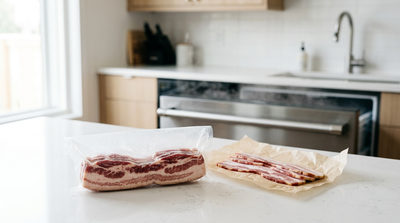
Vacuum sealing cooked steak is highly recommended for preserving culinary quality. By removing 100% of the oxygen from the package, you completely halt aerobic spoilage bacteria and entirely prevent the lipid oxidation that causes warmed-over flavor.
However, there is a critical safety caveat: Vacuum sealing does not bypass or extend the 4-day refrigerated safety limit in residential kitchens. Removing oxygen creates an anaerobic microenvironment. In standard home refrigerators, which frequently fluctuate above 38°F (3.3°C), anaerobic pathogens like non-proteolytic Clostridium botulinum (the bacteria responsible for botulism) can germinate in an oxygen-free package. Therefore, the 4-day biological clock still ticks.
The Freezing Protocol (For Long-Term Storage)
If you know you cannot consume the steak within 4 days, freeze it immediately. According to scientific government evidence, freezing food at 0°F (-18°C) halts all bacterial and microbial growth indefinitely. From a safety standpoint, a frozen cooked steak will remain safe to eat forever.
However, from a quality standpoint, ice crystals slowly damage the cellular structure of the beef over time. To experience the best texture and flavor, established culinary professionals recommend consuming frozen cooked steak within 2 to 3 months of freezing.
To satisfy USDA safety requirements, leftovers should be reheated to an internal temperature of 165°F (74°C) to instantly kill any vegetative pathogens that may have grown during storage. Unfortunately, heating a medium-rare steak to 165°F will denature the muscle proteins, turning it dry and rubbery.
To balance safety with culinary quality, use a low-and-slow heating method. Place the steak in a 250°F oven with a splash of beef broth tightly covered in foil, or use an immersion circulator (sous vide). Slowly bringing the meat up to temperature allows you to safely heat it without aggressively wringing out all of the remaining moisture.
Frequently Asked Questions
Can you eat cooked steak after 5 days in the fridge?
No. Eating cooked steak after 5 days is not recommended by the USDA or FDA. Even if the meat has been stored precisely at or below 40°F (4°C), the hazard of pathogenic bacterial growth—such as Listeria monocytogenes—increases significantly past day 4. Pathogens do not alter the smell or taste of the meat, meaning a 5-day-old steak can look entirely safe while being microbiologically hazardous.
Does vacuum sealing cooked steak make it last longer in the fridge?
While vacuum sealing dramatically improves the taste and quality of the steak by stopping lipid oxidation and preventing aerobic spoilage, it does not bypass the 4-day refrigerated safety limit. Residential refrigerators frequently fluctuate in temperature, creating a serious risk for anaerobic pathogens (bacteria that thrive without oxygen) like Clostridium botulinum to replicate in the oxygen-free bag if temperatures rise above 38°F.
Is it safe to reheat cooked steak more than once?
From a strict microbiological standpoint, it is safe to reheat leftovers multiple times, provided the meat reaches an internal temperature of 165°F (74°C) during each reheating cycle. However, practical consumer experience dictates that every cycle of heating and cooling severely degrades the steak's moisture content, protein integrity, and lipid stability. By the second or third reheating, the steak will be incredibly dry, rubbery, and highly unpalatable.
What happens if you eat bad cooked steak?
Consuming spoiled or pathogen-contaminated cooked steak can lead to serious foodborne illness. Symptoms typically range from mild gastroenteritis—including nausea, abdominal cramps, diarrhea, and vomiting—to severe systemic infections. Infections caused by aggressive pathogens like Listeria, Salmonella, or toxigenic E. coli can be life-threatening and may require hospitalization, particularly for pregnant women, the elderly, or immunocompromised individuals.
Official Sources and Regulatory Standards
- USDA Food Safety and Inspection Service (FSIS): Leftovers and Food Safety Guidelines
- U.S. Food and Drug Administration (FDA): FDA Food Code 2022 Reference Regulations
- Centers for Disease Control and Prevention (CDC): Food Safety Education & Prevention Standards
- Partnership for Food Safety Education: Fight BAC! Core Food Safety Clean, Separate, Cook, Chill Guidelines

David Mercer is the Lead Analyst at ProductLifespans.com. With over 10 years of hands-on experience reviewing hardware durability, home appliance mechanics, and total-cost-of-ownership economics, David specializes in translating complex manufacturer specs into practical repair-vs-replace guidance. When he isn't analyzing lifecycle data, he's testing consumer equipment durability in his home workshop.