How Long Does Popcorn Last? Storage & Safety Guide

Table of Contents
Popcorn is not simply a dried grain; it is a dynamic, biological pressure vessel. How long popcorn lasts depends entirely on its physical state. Raw, unpopped kernels stored in airtight containers will last indefinitely from a food-safety perspective, though their peak popping performance begins to decline after one to two years. Unopened microwave popcorn bags typically last 8 to 12 months before the cooking fats degrade and turn rancid. Already popped popcorn remains fresh for one to two weeks at home if sealed properly, or up to three months if commercially sealed.
Whether you are dealing with a bulk bag of raw kernels, a forgotten microwave bag, or yesterday's movie night leftovers, the key to popcorn longevity is strict moisture and oxygen management. Improper storage will either dry out the kernels, rendering them unpoppable, or allow environmental moisture to turn popped popcorn into a chewy, stale sponge.
Editorial Transparency: ProductLifespans is an independent consumer education platform. Our editorial content is supported by advertising, and advertising does not determine our research findings or recommendations. All biological storage timelines, optimal moisture levels, and chemical spoilage metrics in this guide are derived from the USDA Grain Inspection Handbook standards, FDA food safety regulations (21 CFR Part 117), agricultural research from Purdue University, and official guidelines from The Popcorn Board.
Popcorn Shelf Life by Processing State & Packaging Method
Note: Timelines for microwave popcorn are dictated by the chemical degradation of added fats (lipid oxidation), while raw kernel timelines are dictated by moisture retention. Manufacturer "Best By" dates represent peak quality, not absolute safety expirations.
Core Preservation Principles
- Moisture is the Engine: Unpopped kernels must maintain a strict internal moisture content of 13.5% to 14% to pop. Dropping below 12% results in unpoppable kernels known as "old maids."
- Oils Fail First: Microwave popcorn bags expire much faster than bulk kernels because the built-in hydrogenated or vegetable cooking oils chemically oxidize, creating rancid flavors long before the corn itself spoils.
- The "No-Fridge" Rule: Never store unpopped kernels or microwave bags in the refrigerator. Modern refrigerators act as powerful active dehumidifiers, rapidly stripping the essential moisture from the kernel cores.
Popcorn Shelf Life: The Definitive Timeline
To evaluate your popcorn's current state, you must consider the exact processing and packaging conditions. Industry standards and manufacturer guidelines provide clear expectations for usability. Use this reference table to determine the expected shelf life and the primary mechanical or chemical failure that will eventually occur.
| Popcorn Type | Packaging Condition | Typical Shelf Life | Primary Limiting Factor |
|---|---|---|---|
| Raw Kernels (Bulk/Jar) | Original sealed plastic/glass | Indefinite (Peak: 1–2 Years) | Endosperm moisture loss |
| Raw Kernels (Bulk/Jar) | Opened (Non-airtight container) | 6–12 Months | Environmental moisture exchange |
| Microwave Bag | Unopened, sealed outer wrap | 8–12 Months | Lipid oxidation of cooking oils |
| Microwave Bag | Opened outer wrap, unpopped | 1–2 Weeks | Susceptor degradation & kernel drying |
| Popped Popcorn (Home) | Sealed plastic bag/Tupperware | 1–2 Weeks | Starch retrogradation (staling) |
| Popped Popcorn (Commercial) | Unopened pre-bagged (nitrogen-flushed) | 2–3 Months | Loss of nitrogen gas barrier |
The Material Science of Popcorn: Why It Degrades
To understand popcorn longevity, you must understand the physics of the pop. A popcorn kernel (scientifically known as Zea mays everta) is composed of three primary parts: the pericarp (the hard outer hull), the endosperm (the starchy interior payload), and a tiny droplet of water trapped at the very center.
1. Thermodynamic Viability (Unpopped Kernels)
Think of the pericarp as a microscopic, biological pressure cooker. According to agricultural physics, for a kernel to pop successfully, the internal moisture of the endosperm must reside within a strict range of 13.5% to 14%. During heating, this internal water droplet vaporizes into steam. Once the temperature hits approximately 180°C (356°F), the internal steam pressure reaches an immense 135 PSI (930 kPa).
At this threshold, the starches gelatinize (turn to jelly), the pericarp ruptures, and the starch rapidly expands outward before cooling into a crispy foam. However, if stored in a standard cardboard box or unsealed bag, unpopped kernels undergo water vapor exchange with the dry pantry air. If internal moisture drops below 12%, the kernel cannot generate the critical 135 PSI, yielding unpopped "old maids." Conversely, if stored in a damp basement and moisture rises above 15%, the hull softens and tears prematurely, resulting in a small, dense, unappealing pop.
2. Lipid Oxidation (Microwave Popcorn)
Microwave popcorn bags do not just contain kernels; they house a matrix of vegetable cooking oils (such as palm oil or soybean oil), salt, and artificial flavorings. The limiting lifespan factor here is not the corn, but the fat.
Over time, these fats react with ambient oxygen that diffuses through the paper packaging. This process, known as lipid oxidation, produces short-chain aldehydes and ketones. In plain terms, oxygen breaks down the fat molecules until they emit a highly objectionable, rancid odor that smells remarkably like oil paint or old crayons. Furthermore, microwave bags rely on a susceptor—the gray, metalized plastic film patch inside the bag that absorbs microwaves and turns them into radiant heat. If exposed to extreme temperature swings, this susceptor can degrade, leading to uneven heating or localized scorching.
3. Starch Retrogradation (Popped Popcorn)
Once popped, the foam-like starch structure is highly amorphous and hygroscopic (meaning it acts like a sponge for water vapor). When exposed to air, the starches quickly undergo starch retrogradation. This is a scientific term for the starch molecules realigning and crystallizing while simultaneously absorbing humidity from the room.
As the popcorn's Water Activity ($a_w$) increases, the texture shifts from brittle and crisp to leathery and chewy. Much like managing how long dehydrated food lasts by using hermetic seals to keep moisture out, popped popcorn requires total isolation from ambient humidity to remain fresh.
Preservation Protocols: How to Store Popcorn Correctly
Proper storage is designed to halt moisture migration, prevent chemical oxidation, and maintain the structural integrity of the packaging.
1. Bulk Raw Kernels
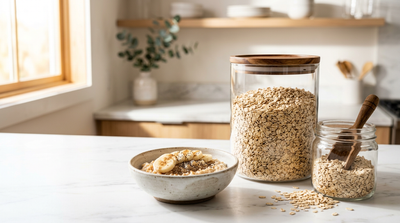
Avoid storing raw kernels in low-density polyethylene (LDPE) sandwich bags or leaving them in their original cardboard boxes, as these materials exhibit high water vapor transmission rates. Instead, transfer raw kernels into glass Mason jars with plastisol-lined metal lids, or food-grade PET plastic canisters with silicone gaskets. Store these containers in a cool, dark pantry at temperatures between 10°C (50°F) and 21°C (70°F). Proper temperature control is as crucial here as it is when determining chocolate shelf life, where fluctuating heat causes irreversible chemical degradation.
Pro-Tip: Avoid Freezing Kernels: A common consumer myth is that freezing popcorn kernels improves popping performance. Industry standards strongly advise against this. Freezing raw kernels in standard containers causes ice crystal sublimation—the moisture turns directly from solid ice to gas, effectively freeze-drying the kernel cores. Furthermore, dropping frozen kernels directly into hot oil lowers the starting temperature of your popper, leading to longer heat-up times and tougher popped corn.
2. Microwave Popcorn Bags
Keep microwave bags completely sealed in their outer plastic cellophane wrap until immediately before cooking. This outer wrap acts as a vital chemical barrier, blocking oxygen to delay lipid oxidation of the inner fats. Always store the boxes flat. If stored vertically in a hot cabinet, the oil slurry inside can melt, sliding off the kernels and pooling at the bottom of the bag away from the susceptor heating patch.
3. Popped Popcorn
When storing home-popped corn, you must allow it to cool completely to room temperature before sealing it. If you package warm popcorn, it will trap steam inside the container, raising the internal humidity and turning the entire batch soggy within hours. For maximum longevity, use rigid, snap-top airtight containers rather than plastic baggies.
Commercially popped gourmet popcorn stays fresh longer because manufacturers utilize nitrogen flushing. This process literally blasts the oxygen out of the bag and replaces it with inert nitrogen gas before sealing. This stalls both lipid oxidation and staling. Once you break this seal, you have about 3 to 5 days before ambient humidity ruins the texture.
Failure Signals: How to Tell If Popcorn Has Spoiled
Consuming degraded or improperly stored popcorn ranges from a disappointing culinary experience to a potential food safety hazard. Inspect your popcorn using these sensory and physical diagnostics before consumption.
- The Olfactory (Smell) Test: Sniff microwave popcorn bags before putting them in the microwave. If you detect a harsh smell reminiscent of oil paint, varnish, or old putty, the fats have undergone lipid oxidation. Do not consume it; the resulting flavor will be incredibly bitter and metallic.
- The Physical Test: For popped popcorn, gently squeeze a kernel. If it yields like foam rubber rather than shattering cleanly, starch retrogradation has occurred. While it is physically safe to eat, it will be unpleasantly chewy. For raw kernels, a failure is evident if more than 15% of your batch results in unpopped "old maids."
Critical Safety Warning: Fungal Pathogens & Mycotoxins
If raw, unpopped kernels are exposed to high relative humidity (above 70%) or liquid water, they can become colonized by fungal pathogens, specifically Aspergillus flavus. According to the FDA, this mold produces aflatoxins, which are highly toxic, carcinogenic mycotoxins. Inspect raw kernels visually; if they exhibit a dull appearance, grayish-green dust near the tip, or emit a musty, damp-basement odor, discard the entire batch immediately. Systemic mycotoxins cannot be washed off or destroyed by the heat of popping.
Salvaging Stale Popcorn: Calibrated Recovery Protocols
If your popcorn has suffered from improper storage, it may not be destined for the waste bin. Use these carefully calibrated methods to safely restore viability to kernels or texture to popped corn.
Protocol A: Rehydrating Dry, Unpoppable Kernels
If your bulk kernels are yielding a massive amount of unpopped kernels, they have likely dried out due to ambient pantry air. You can quantitatively rehydrate them using this volumetric process:
- Step 1 (Measure): Measure exactly 3 cups (approx. 600 g) of raw, dry kernels and place them into a clean 1-quart glass mason jar.
- Step 2 (Hydrate): Add exactly 1 tablespoon (15 mL) of distilled water to the jar. Avoid tap water, as dissolved municipal chlorine can negatively affect the final flavor profile.
- Step 3 (Agitate): Seal the jar tightly with a solid metal or plastic lid. Shake the jar vigorously for a full 60 seconds. This evenly distributes the water across the pericarps (hulls) of all kernels.
- Step 4 (Rest & Absorb): Store the jar in a cool, dark place. Shake the jar once in the morning and once at night. Wait 3 to 4 days. This delay is absolutely critical. The water needs time to physically migrate through the dense hull and integrate completely into the endosperm's crystalline starch matrix. If you pop them too soon, the water will simply boil off the outside of the hull.
- Step 5 (Test): After 4 days, perform a test pop with 20 kernels. If they pop cleanly and with good volume, the batch is successfully salvaged.
Protocol B: Reviving Stale Popped Popcorn
If your popped popcorn has absorbed environmental humidity and turned chewy, you can reverse the effects of starch retrogradation by evaporating that excess water out of the crystalline structure. Similar to how a quick stint in a hot, dry pan can revive flour tortillas, controlled baking will crisp up stale popcorn.
- Step 1 (Preheat): Heat your conventional oven to 121°C (250°F). Do not use a microwave for this step, as microwaves heat by exciting water molecules, which will only steam the starch further and make the popcorn even chewier.
- Step 2 (Spread): Lay the stale popped popcorn in a single, even layer across a large, ungreased rimmed baking sheet.
- Step 3 (Bake): Place the sheet in the oven for exactly 5 minutes.
- Step 4 (Cool): Remove the pan from the oven and let the popcorn sit at room temperature for 2 to 3 minutes. As the heat escapes, it carries away the trapped ambient moisture, leaving the starch molecules rigid, fragile, and perfectly crisp once again.
Frequently Asked Questions
Can you eat expired microwave popcorn?
Yes, you can safely eat expired microwave popcorn provided the packaging is perfectly intact, free of mold, and has been stored in a cool place. However, the culinary experience will be severely degraded. The "Best By" date usually spans 8 to 12 months. After this point, the built-in vegetable oils undergo gradual lipid oxidation, which creates a rancid, bitter taste and an odor similar to old paint. Additionally, older kernels lose internal moisture, yielding a high ratio of unpopped kernels.
Why did my popcorn kernels stop popping?
Your kernels stopped popping because they lost their critical internal moisture content. According to industry standards, a popcorn kernel requires a highly specific internal moisture level of 13.5% to 14% to generate the necessary steam. If stored in a dry environment, the moisture drops below 12%, meaning the kernel can no longer build the 135 PSI of internal pressure required to rupture the tough outer hull. The result is a pot full of unpopped "old maids."
How do you rehydrate dry popcorn kernels?
To safely rehydrate dry kernels, place them in a glass jar with a tight-fitting lid. The standard ratio is adding 1 teaspoon (approx. 5 mL) of distilled water per 1 cup (approx. 200 g) of raw kernels. Seal the jar, shake vigorously to distribute the moisture evenly across all hulls, and let the jar sit in a cool, dark cabinet for 3 to 4 days. This resting period gives the starchy endosperm enough time to slowly absorb the water into its core before you attempt to pop them.
How do you revive stale popped popcorn?
Stale popped popcorn can be easily revived by baking it in a conventional oven to drive off excess environmental moisture. Spread the stale popcorn in a single, even layer on a baking sheet and heat it in an oven preheated to 250°F (121°C) for exactly 5 minutes. Let it cool for a few minutes at room temperature. This process evaporates the absorbed humidity, physically re-crisping the starch molecules.
Official Guidelines, Standards, and References
- The Popcorn Board: Industry guidelines on crop handling, optimum storage relative humidity, and consumer popping science. Popcorn.org
- USDA Grain Inspection Handbook: Agricultural marketing standards detailing moisture testing protocols and grading limits for yellow and white popcorn. USDA GIPSA Standards
- U.S. Food and Drug Administration (FDA): 21 CFR Part 117 rules regarding food safety, Current Good Manufacturing Practices, and regulatory limits on systemic mycotoxins in grain. FDA Regulations
- Purdue University Cooperative Extension Service: Peer-reviewed agricultural research on optimal popcorn production, moisture thermodynamics, and long-term grain preservation. Purdue Extension

David Mercer is the Lead Analyst at ProductLifespans.com. With over 10 years of hands-on experience reviewing hardware durability, home appliance mechanics, and total-cost-of-ownership economics, David specializes in translating complex manufacturer specs into practical repair-vs-replace guidance. When he isn't analyzing lifecycle data, he's testing consumer equipment durability in his home workshop.