How Long Does Kahlua Last? Storage & Shelf Life

Table of Contents
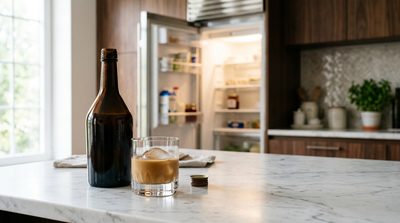
Kahlúa Original lasts up to four years (48 months) from its production date, whether opened or unopened, before its quality begins to degrade. Flavored varieties have a shorter shelf life of two years, while cream-based Ready-to-Drink (RTD) variants typically last just one year unopened. Because Kahlúa Original is bottled at 20% Alcohol by Volume (ABV), it prevents harmful bacterial growth, making it technically safe to drink well past this four-year window. However, atmospheric oxidation will eventually cause its distinct Arabica coffee aroma and rich vanilla flavor to fade, leaving behind a flat, overly sweet liqueur.
Kahlúa Shelf Life by Formulation Type & Flavor Degradation
Shelf-life estimates are based directly on manufacturer (Pernod Ricard) guidelines. Storage conditions drastically impact the preservation of volatile coffee compounds.
ProductLifespans is an independent consumer education platform. Our editorial content is supported by advertising, and advertising does not determine our research findings or recommendations. All chemical degradation timelines and lot code instructions in this guide are derived from official Pernod Ricard manufacturer specifications, U.S. FDA regulations, and standard food science principles regarding lipid oxidation in coffee.
- Alcohol Preserves Safety, Not Flavor: The 20% ABV in original Kahlúa makes it immune to toxic bacteria indefinitely, but the delicate coffee oils will still oxidize and lose flavor after 48 months.
- Sugar Crystallization Ruins Seals: Failing to wipe the bottle neck after pouring allows sugar crystals to form, breaking the airtight seal of the cap and accelerating flavor degradation.
- Dairy Variants Carry Pathogen Risks: Unlike the original recipe, Kahlúa Mudslides and cream-based products contain real dairy. They must be refrigerated after opening and discarded immediately if they smell sour or show signs of curdling.
The Kahlúa Shelf Life Reference Matrix
To maximize your drinking experience, the manufacturer sets specific windows for optimal flavor retention. Depending on the exact blend of ingredients, your bottle falls into one of three categories.
| Kahlúa Product Type | Recommended Shelf Life (Unopened) | Recommended Shelf Life (Opened) | Primary Storage Requirement |
|---|---|---|---|
| Kahlúa Original (20% ABV) | 4 Years | 4 Years (Optimal within 12–24 months) | Cool, dark pantry or cupboard |
| Kahlúa Flavored Variants (e.g., Mint Mocha, Chili Chocolate) | 2 Years | 2 Years (Optimal within 6–12 months) | Cool, dark pantry or refrigerator |
| Ready-to-Drink (RTD) / Cream (e.g., Mudslide) | 1 Year (Check "Best Before" date) | 6 Months (Must refrigerate) | Refrigerator (4°C / 39°F) |
The Science of Degradation: Why Kahlúa Loses Flavor Over Time
Many consumers believe that because Kahlúa is an alcoholic beverage, it enjoys the near-infinite shelf life of high-proof spirits like whiskey, gin, or vodka. This is a common misconception.
High-proof spirits (typically 40% ABV and above) contain very little organic matter and feature high ethanol concentrations, which halt almost all chemical transformations. Kahlúa, however, is a liqueur (often called a cordial) formulated with heavy sugar syrup, vanilla, and real Arabica coffee beans, bottled at a moderate 20% Alcohol by Volume (ABV). While the alcohol prevents bacterial spoilage, the presence of complex organic ingredients triggers three primary degradation processes over time:
1. Oxidation of Volatile Organic Compounds
Once a bottle of Kahlúa is opened, the liquid is exposed to atmospheric oxygen. This triggers oxidation, a chemical reaction between oxygen and the volatile organic compounds—the tiny, invisible molecules that float into your nose and register as "coffee" or "vanilla." Over time, oxygen neutralizes these delicate aroma molecules. Just as you might wonder how long opened red wine lasts once the cork is pulled, Kahlúa suffers a similar, albeit slower, fate. The liqueur is eventually left smelling flat, tasting excessively sweet, or becoming heavily alcohol-forward as the masking flavors evaporate.
2. Lipid Rancidity in Coffee Oils
Arabica coffee beans naturally contain lipids, or oils. While these oils contribute to Kahlúa’s famously velvety mouthfeel, they are highly susceptible to rancidity when exposed to heat, light, and air over long periods. Lipid rancidity breaks down these fats into short-chain fatty acids. Think of how a stick of butter left on a warm kitchen counter eventually smells sour or cardboard-like. A similar process happens to the coffee oils in Kahlúa, introducing bitter off-flavors that mask the intended chocolate and roasted notes.
3. Sugar Crystallization and Cap Failures
According to TTB (Alcohol and Tobacco Tax and Trade Bureau) standards, liqueurs must contain at least 2.5% sweetening materials by weight, and Kahlúa contains significantly more than that. This high concentration of sucrose makes the liquid highly hygroscopic, meaning it acts like a molecular sponge, absorbing and holding moisture from the air.
When you pour a drink, traces of this sticky liquid remain on the neck threads of the bottle. As the alcohol and water evaporate, the sucrose precipitates, causing sugar crystallization to form a hard crust around the cap. If these crystals are not wiped away, they act like grit in a gear, preventing the cap from forming a perfectly flush, airtight seal. This compromised seal allows continuous oxygen to leak into the bottle, accelerating the oxidation of the remaining liquid.
How to Store Kahlúa to Maximize Its Shelf Life
To slow down chemical degradation and preserve the volatile compounds of the Arabica coffee, you need to control temperature, light, and oxygen exposure.
- Step 1: Wipe the Cap and Bottle Neck Clean. Every time you pour Kahlúa, use a clean, damp microfiber cloth to wipe down the bottle's glass neck and threads, as well as the inside of the cap. Removing residual sugar syrup prevents crystallization, ensuring a perfect, airtight physical seal that blocks oxygen ingress.
- Step 2: Maintain Temperature Stability. Store Kahlúa in a climate-controlled space between 10°C and 20°C (50°F to 68°F). Avoid storing the bottle near heat-emitting appliances like stoves, ovens, or above refrigerators. Rapid temperature fluctuations cause the air inside the bottle to expand and contract. This "breathing" effect draws fresh, oxygen-rich air past the cap seal, drastically accelerating oxidation.
- Step 3: Eliminate Ultraviolet (UV) Light Exposure. Keep Kahlúa in a dark pantry, liquor cabinet, or drawer. Avoid open bar carts exposed to direct sunlight or harsh fluorescent lighting. UV rays initiate photolytic degradation—meaning the light energy literally shatters the chemical bonds holding the dark caramel colorants and the organic coffee flavor compounds together.
- Step 4: Manage Bottle Headspace (Decanting). When a bottle of Kahlúa is more than 50% empty, the large volume of trapped air (known as headspace) inside the bottle works constantly to oxidize the liquid. If you plan to store a half-empty bottle for more than six months, pour it into a smaller, clean glass jar or swing-top bottle to minimize air contact.
Refrigeration: Is It Necessary?
Refrigeration is strictly mandatory for cream-based Kahlúa variants, but it is not required for Kahlúa Original or its non-dairy flavored counterparts. The 20% ABV is more than sufficient to suppress microbial growth at room temperature. However, storing opened bottles in a refrigerator or a dedicated white wine fridge is highly recommended. The lower temperature slows down chemical kinetics, preserving the fresh coffee aromatics much longer than warm room-temperature storage.
How to Read Kahlúa Lot Codes to Determine Age
Unlike milk or bread, standard Kahlúa bottles do not feature a simple, consumer-friendly "expiration date." Instead, the parent company, Pernod Ricard, prints an alphanumeric Julian Date/Lot Code directly on the glass bottle (often near the base or on the lower neck). Deciphering this code allows you to calculate exactly when the bottle was manufactured.
The format typically resembles: L [Y] [DDD] [Batch Info]
- L: Simply stands for "Lot."
- Year Identifier [Y]: The single digit immediately following the "L" represents the last digit of the year of manufacture. (Example: 1 = 2021, 2 = 2022, 3 = 2023, 4 = 2024.)
- Julian Day [DDD]: The next three digits represent the sequential day of the year out of 365 days. (Example: 001 = January 1st, 181 = June 30th, 365 = December 31st.)
Real-World Example:
If you find a dusty bottle in your cabinet with the code L3152XX, here is how you translate it:
- The first digit after the "L" is 3, indicating it was produced in 2023 (or potentially 2013, though visual aging usually makes a decade-old bottle obvious).
- The next three digits are 152, which represents the 152nd day of the year (which falls on June 1st).
- Therefore, this bottle was manufactured on June 1, 2023. Based on Pernod Ricard's 48-month guideline, its optimal shelf life extends to June 1, 2027.
Signs of Spoiled Kahlúa: When to Discard Your Bottle
Evaluating Kahlúa past its recommended shelf life involves examining its physical, chemical, and organoleptic properties (the sensory characteristics you can see, smell, and taste).
1. Smell (Olfactory Evaluation)
Pour a small amount into a tasting glass. Fresh Kahlúa should smell distinctly of rich, roasted coffee with sweet backing notes of vanilla and rum. If the aroma is sour, intensely bitter (resembling rancid vegetable oil), or smells strictly of harsh rubbing alcohol with no trace of coffee, the organic oils have oxidized and degraded beyond repair.
2. Taste (Mouthfeel and Flavor)
If the liqueur passes the smell test, take a microscopic sip. Degraded Kahlúa will taste distinctly flat, overly cloying, or watery, accompanied by a sharp, unpleasant alcohol burn. The rich, complex interplay between the Arabica coffee, cane spirit, and vanilla will be entirely absent.
3. Visual and Physical Appearance
Fresh Kahlúa is thick, syrup-like, and heavily coats the sides of a glass. If the liquid feels thin and watery, the sugar suspension has degraded. Furthermore, the deep, dark-brown caramel color may fade to a lighter, translucent brown due to photolytic reactions if it was stored in the light. Lastly, if you see white flakes or solid chunks settling at the bottom of the bottle (distinct from normal sugar crystals around the neck), the ingredients have chemically separated.
CRITICAL YMYL SAFETY WARNING: Cream-Based and Ready-to-Drink (RTD) Variants
While Kahlúa Original is safe to consume past its prime due to its 20% ABV, Kahlúa Cream-Based products (such as the Kahlúa Mudslide) pose a genuine health risk if consumed past their expiration dates. These variants contain real dairy products. Once opened, or once they pass their printed "Best Before" date, the dairy proteins can curdle and spoil, harboring foodborne pathogens. If a cream-based Kahlúa shows signs of separation, curdling, a sour dairy smell, or is past its expiration date, discard it immediately.
Longevity Lab: Pro-Tips for Salvaging Older Kahlúa
If you have an older bottle of Kahlúa Original that is past its 4-year peak flavor window but shows no signs of spoilage, do not pour it down the drain just yet. You can salvage its remaining utility with these techniques:
Pro-Tip: The Coffee Infusion Trick
If your older Kahlúa has lost its coffee aroma but still tastes pleasantly sweet and clean, you can revive it. Drop 5 to 10 high-quality, lightly cracked Arabica coffee beans directly into the bottle. Let them steep for 24 to 48 hours at room temperature, then strain them out. This process infuses fresh, highly volatile coffee oils back into the liqueur, restoring its missing aromatic top notes.
Pro-Tip: Freeze-Storage for Cocktails
If you only use Kahlúa occasionally—perhaps once a year during the holidays—store the opened bottle directly in your freezer. Because of the 20% ABV and high sugar content, it will not freeze solid. However, the extreme cold (-18°C / 0°F) almost completely stalls the oxidation process, preserving the complex aromatic compounds almost indefinitely compared to a room-temperature pantry.
Culinary Upcycling (Baking)
Do not use faded, older Kahlúa for raw, alcohol-forward cocktails like Black Russians or Espresso Martinis. Because there are so few ingredients in these drinks, the degraded flavors of the old liqueur will be instantly obvious. Instead, use it in baking. The high heat of an oven cooks off the stale notes and concentrates the remaining sucrose and vanilla. Older Kahlúa is perfect for soaking ladyfingers in Tiramisu, adding to Kahlúa-infused brownies, enriching chocolate cakes, or boiling into a glaze reduction for meats.
Frequently Asked Questions
Does Kahlúa go bad if opened?
Kahlúa does not spoil or become toxic after opening because its 20% alcohol by volume (ABV) prevents bacterial growth. However, open bottles are exposed to atmospheric oxygen, which causes the delicate coffee oils to oxidize and the aroma to fade over time. For the absolute best flavor in cocktails, the manufacturer recommends finishing an opened bottle of Kahlúa Original within 12 to 24 months.
Do you need to refrigerate Kahlúa after opening?
No, refrigeration is not strictly required for Kahlúa Original or Kahlúa Flavored variants because the alcohol content acts as a powerful natural preservative. However, keeping it in the refrigerator is completely safe and actively helps slow down the oxidation of coffee oils, preserving its flavor profile longer than cabinet storage. Note: Cream-based Kahlúa RTD products, like Mudslides, must always be refrigerated after opening due to their dairy content.
Can old Kahlúa make you sick?
Unflavored, original Kahlúa past its recommended shelf life is highly unlikely to make you sick because harmful bacteria cannot survive in a 20% ABV environment. The only exception is cream-based or dairy-containing Kahlúa products. If these are expired or have been stored improperly in a warm environment, the dairy can curdle, spoil, and potentially cause foodborne illness.
Why did my Kahlúa form white crystals around the cap?
The white, crusty substance around the cap and bottle neck is crystallized sugar. Because Kahlúa contains exceptionally high amounts of sugar, any liquid left on the threads of the bottle neck evaporates when exposed to air, leaving behind solid sucrose crystals. This is harmless to consume but should be wiped away with a damp cloth to ensure the cap can seal tightly, which prevents excess oxygen from entering the bottle.
Official Sources, Standards, and Research
- Pernod Ricard Brand Guidance: Official manufacturer shelf-life specifications establishing timelines for Kahlúa Original, Flavored Variants, and RTD products. Pernod Ricard Official Site
- U.S. Food and Drug Administration (FDA): Production regulations under 21 CFR Part 110 regarding the Current Good Manufacturing Practice in Manufacturing, Packing, or Holding Human Food.
- Alcohol and Tobacco Tax and Trade Bureau (TTB): Governed by 27 CFR Part 5 (Labeling and Advertising of Distilled Spirits), explicitly defining liqueurs and cordials as containing not less than 2.5% by weight of sweetening materials.
- International Organization for Standardization (ISO): Manufactured in facilities conforming to ISO 22000 Food Safety Management Systems standards.

David Mercer is the Lead Analyst at ProductLifespans.com. With over 10 years of hands-on experience reviewing hardware durability, home appliance mechanics, and total-cost-of-ownership economics, David specializes in translating complex manufacturer specs into practical repair-vs-replace guidance. When he isn't analyzing lifecycle data, he's testing consumer equipment durability in his home workshop.