How Long Does Deli Turkey Last in the Fridge?

Table of Contents
Opened or fresh-sliced deli turkey lasts 3 to 5 days in a refrigerator kept at or below 40°F (4°C). Unopened, factory-sealed vacuum packs remain safe for up to 2 weeks, or until the manufacturer's printed expiration date. Discard any turkey left at room temperature for over 2 hours.
Deli Turkey Storage Timeline
All biological timelines are maximum safe limits established by the USDA Food Safety and Inspection Service (FSIS) and FDA Food Code for refrigerators kept at or below 40°F (4°C).
- The 5-Day Rule Overrides Labels: Once a package of deli turkey is opened, you must consume or discard it within 3 to 5 days, regardless of the printed expiration date.
- Invisible Threats: Dangerous pathogens like Listeria multiply at refrigerator temperatures without changing the smell, taste, or appearance of the meat.
- Avoid the Refrigerator Door: Store deli meats in the coldest, most temperature-stable part of your fridge (usually the dedicated deli drawer) to prevent rapid bacterial growth.
The Science of Turkey Spoilage: Pathogens vs. Physical Decay
Understanding how deli turkey degrades requires distinguishing between two entirely different biological processes: harmless physical spoilage and invisible, highly dangerous pathogenic contamination. If you only rely on your nose to test if meat is safe, you are leaving yourself exposed to severe foodborne illness.
High Water Activity and Bacterial Growth
In food science, the amount of free water available for bacteria to consume is measured as "water activity" (expressed as aw). Deli turkey has an incredibly high water activity level, usually measuring at or above 0.97. This high moisture content turns the meat into an ideal breeding ground for rapid microbial colonization.
Organoleptic Spoilage vs. Invisible Pathogens
Not all bacteria are created equal. When deli turkey spoils, it usually experiences two distinct microbial attacks:
- Organoleptic Spoilage (The Visible Decay): This is caused by relatively harmless spoilage bacteria, such as Pseudomonas. These bacteria break down the proteins in the turkey (a process called proteolysis). As they eat, they produce sticky bacterial biofilms (the slime you feel), off-odors, and color changes. While gross, these bacteria rarely cause severe illness.
- Pathogenic Contamination (The Invisible Threat): This involves dangerous bacteria like Salmonella, E. coli, and most notably, Listeria monocytogenes. Pathogenic contamination is entirely invisible, odorless, and tasteless. A slice of turkey can look and taste pristine while harboring lethal levels of bacteria.
The Specific Threat of Listeria
Unlike most foodborne bacteria that go dormant in cold environments, Listeria monocytogenes is a psychrotrophic bacterium. In simple terms, it is cold-loving. It actively multiplies at standard refrigerator temperatures (32°F to 40°F / 0°C to 4°C). Because of this unique trait, deli meat is one of the primary vectors for Listeriosis, an infection with a high mortality rate for pregnant individuals, newborns, older adults, and immunocompromised people.
To fight this, manufacturers inject commercial deli turkeys with antimicrobial biochemicals like Sodium Lactate and Sodium Diacetate. These act as systemic inhibitors that slow down the growth of Listeria, but they do not stop it entirely. After 5 days in the fridge, the bacteria can reach dangerous levels.
Storage Timelines: Sealed vs. Sliced vs. Opened
Deli turkey shelf life varies significantly depending on how the meat is processed, packaged, and handled before it reaches your kitchen.
| Packaging / Product State | Safe Storage Window (≤ 40°F) | Biochemical Rationale |
|---|---|---|
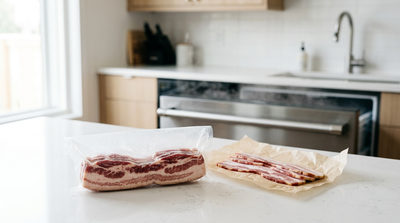
| Factory-Sealed, Unopened Pack | Up to 2 weeks (or printed "Use-By" date) | Sealed using Modified Atmosphere Packaging (MAP), which replaces oxygen with nitrogen and carbon dioxide to halt aerobic bacterial growth. |
| Freshly Sliced (Deli Counter) | 3 to 5 days | Exposed to ambient air, potential slicing machine cross-contamination, and high oxygen levels during loose wrapping. |
| Opened Commercial Package | 3 to 5 days | Once the MAP factory seal is broken, rapid oxygenation and ambient environmental bacteria trigger immediate replication. |
Deciphering Sell-By vs. Use-By Dates
Understanding date labels is critical for avoiding unnecessary food waste while staying safe. A "Sell-By" date is strictly a store-management tool for inventory rotation; it is perfectly safe to purchase the product on this date. However, a "Use-By" or "Best-By" date is the manufacturer’s estimate for peak quality and safety in an unopened package.
Most importantly: Once you open the package, the printed date is void. The 3-to-5-day biological safety clock begins the moment the seal is broken, regardless of whether the printed date says the meat is good for another month.
Core Cold-Chain Protocols to Maximize Shelf Life
To maximize the lifespan of your deli turkey and mitigate pathogen risks, you must control temperature, oxygen, and human contact.
1. Maintain a True Sub-38°F Climate
The USDA safety threshold is 40°F (4°C), but many domestic refrigerators have severe temperature fluctuations. If your fridge spikes to 42°F for a few hours a day, spoilage accelerates exponentially. Aim to calibrate your refrigerator between 34°F and 38°F (1°C to 3°C).
Never store deli meat in the refrigerator door. The door is the warmest part of the fridge. Every time it is opened, the meat is exposed to warm room air, pushing it into the Danger Zone (40°F to 140°F / 4°C to 60°C) where bacteria can double every 20 minutes. Keep it in the dedicated deli drawer, which holds a stable, colder microclimate.
2. Transition to Airtight Decanting
Original deli paper or loose zip-top bags allow rapid oxygen exchange. Oxygen feeds aerobic spoilage bacteria and causes moisture loss (desiccation), leading to dried-out, curled meat edges.
3. Practice Anti-Inoculation Handling
Every time human hands touch deli meat, natural skin flora (such as Staphylococcus aureus) and environmental yeasts are introduced to the surface of the turkey. Never reach into the storage container with bare hands. Always use clean tongs or a fork to pull out the exact slices you need, then reseal the container immediately.
How to Diagnose Spoiled Deli Turkey
Perform a multi-sensory diagnostic check before consuming any refrigerated deli turkey. If it exhibits any of the following irreversible failure signs, throw it away immediately.
- The Tactile Check (Sticky Biofilms): Run a clean finger over the surface of the meat. If it feels tacky, excessively sticky, or has a distinct slimy film, discard it. This slime is not natural meat juice; it is a bacterial biofilm created by colonies of bacteria feeding on the meat's sugars and proteins.
- The Visual Check (Discoloration): Fresh turkey should be pale pink, white, or slightly light brown if roasted. A sudden shift toward a dull grey, yellow, or greenish hue indicates chemical oxidation and advanced enzymatic breakdown.
- The Olfactory Check (Off-Odors): Take a brief sniff. Healthy deli turkey has a mild, savory scent. A sour, vinegary, yeasty, or ammonia-like smell indicates high concentrations of acidic bacterial waste products.
"Longevity Lab" Protocols: Freezing and Transport
If you have purchased more turkey than you can consume in five days, you must use advanced protocols to halt the biological clock.
The Transit Preservation Rule
The car ride from the grocery store check-out to your home refrigerator is a major failure point. Heat accelerates bacterial replication rapidly.
- Under 90°F (32°C) Ambient Temperature: You must refrigerate the turkey within 2 hours of purchase.
- Above 90°F (32°C) Ambient Temperature: During hot summer months, you must refrigerate the turkey within 1 hour. Always use an insulated thermal grocery bag with an ice pack for transport during the summer.
High-Fidelity Freezing Protocol
While freezing keeps food microbiologically safe indefinitely, delicate poultry fibers can suffer severe texture degradation if frozen poorly. When meat freezes slowly, large ice crystals form, puncturing the cell walls. When thawed, the water leaks out (a process called syneresis), leaving the turkey mushy and dry.
- Step 1: Portioning: Divide the turkey into single-use portions. This prevents you from having to thaw a massive block of meat when you only want a single sandwich.
- Step 2: Double-Wrapping: Wrap each portion tightly in plastic cling film, squeezing out all ambient air. This physical barrier is critical for preventing freezer burn (sublimation).
- Step 3: Secondary Seal: Place the wrapped portions inside a heavy-duty zipper freezer bag and press out the remaining air.
- Step 4: Labeling: Date the bag with a permanent marker. For the best flavor and texture, consume the frozen turkey within 1 to 2 months.
- Step 5: Safe Thawing: Never thaw deli turkey on the kitchen counter at room temperature. Transfer the required portion to the refrigerator 24 hours before use so it thaws slowly and safely out of the Danger Zone.
Frequently Asked Questions
Can you eat deli turkey after 7 days?
No. According to federal food safety guidelines, you should never consume opened or freshly sliced deli meat after 5 days. While it may look and smell perfectly fine, the risk of pathogenic growth—specifically cold-loving Listeria monocytogenes—increases drastically after day 5. For vulnerable groups like pregnant women, young children, and seniors, eating 7-day-old deli meat poses a severe, life-threatening health risk.
Why does deli turkey get slimy so fast?
Deli turkey gets slimy due to the rapid formation of bacterial biofilms. Turkey has extremely high water availability and is handled frequently during the mechanical slicing process, which introduces environmental bacteria. These bacteria consume the surface sugars and proteins of the meat. As they feed, they excrete a sticky waste product. Keeping the meat airtight and chilling your fridge below 38°F (3.3°C) will slow this process down.
Is slightly slimy deli turkey safe to eat if cooked?
No. Do not attempt to "cook off" the slime. Although thorough cooking to an internal temperature of 165°F (74°C) will kill active living bacteria, it does not destroy heat-stable toxins produced by certain contaminants, such as Staphylococcus aureus. Even after cooking, these toxins will cause severe food poisoning. Furthermore, the texture and flavor of slimy meat are irreversibly ruined.
Can you freeze deli turkey in its original packaging?
It depends entirely on the packaging. If the turkey is inside a thick, unopened, vacuum-sealed factory pack, you can put it directly into the freezer. However, if it is in a thin deli counter plastic bag or a flimsy plastic tub, do not freeze it as-is. Thin plastics are highly permeable to oxygen over time, which will cause rapid, severe freezer burn. You must re-wrap the meat tightly in plastic wrap and place it in a heavy-duty freezer bag.
Official Food Safety Standards and References
- USDA Food Safety and Inspection Service (FSIS): Official Cold Food Storage Chart and Timelines
- U.S. Food and Drug Administration (FDA): Food Code 2022 (Section 3-501.17 on Date Marking and Storage)
- Centers for Disease Control and Prevention (CDC): Listeria Prevention and Deli Meats Clinical Guidance

David Mercer is the Lead Analyst at ProductLifespans.com. With over 10 years of hands-on experience reviewing hardware durability, home appliance mechanics, and total-cost-of-ownership economics, David specializes in translating complex manufacturer specs into practical repair-vs-replace guidance. When he isn't analyzing lifecycle data, he's testing consumer equipment durability in his home workshop.