How Long Does Cooked Meat Last in Fridge? Safety Limits

Table of Contents
According to USDA and FDA food safety standards, cooked meat can be safely stored in a domestic refrigerator at or below 40°F (4°C) for 3 to 4 days. To prevent foodborne illness, refrigerate leftovers in shallow, airtight containers within two hours of cooking.
Whether you are an avid meal prepper looking to maximize your grocery budget or a cautious home cook worried about food safety, understanding exactly how long cooked meat lasts in the fridge is a high-stakes matter. Unlike a stale cracker or wilted lettuce, spoiled meat poses a severe health risk. The difference between a safe, delicious leftover meal and a severe case of gastrointestinal distress relies entirely on strict temperature control, proper cooling techniques, and knowing when to throw food away.
ProductLifespans is an independent consumer education platform. Our editorial content is supported by advertising, and advertising does not determine our research findings or recommendations. All microbiological timelines, thermal danger zones, and food safety standards discussed in this article are derived directly from United States Department of Agriculture (USDA) Food Safety and Inspection Service guidelines, the FDA Food Code, and Centers for Disease Control and Prevention (CDC) epidemiological data.
- The 3-to-4 Day Rule: Regardless of whether it is chicken, beef, or pork, the official federal limit for safe refrigeration is four days. After this point, dangerous bacteria begin to reach infectious levels.
- The 2-Hour Cooling Window: Leftovers must be placed in the refrigerator within two hours of cooking. If your kitchen ambient temperature is above 90°F (32°C), that window shrinks to just one hour.
- Pathogens Are Invisible: The bacteria that cause severe food poisoning do not change the smell, taste, or look of the meat. You cannot "sniff test" your way to food safety.
Cooked Meat Leftover Lifespan Timeline
Timeline based on USDA and FDA safety metrics for domestic refrigerators maintained at or below 40°F (4°C). Assumes food was refrigerated within 2 hours of initial cooking.
1. Quick Reference: Safe Cold-Storage Windows for Cooked Meat
When dealing with cooked animal proteins, time and temperature are your only defense mechanisms against biological degradation. The USDA and FDA rely on highly specific microbiological kinetic models to determine how fast bacteria grow. While freezer storage keeps meat safe almost indefinitely by literally freezing biological activity in its tracks, refrigeration simply slows the process down. In the fridge, the clock is always ticking.
Here is the official breakdown of how long various cooked meats last in a standard domestic refrigerator versus a freezer. Note that freezing beyond the recommended windows is entirely safe, but the meat will suffer severe moisture loss (freezer burn) and textural breakdown due to ice crystallization.
| Protein Category | Refrigerated Limit (≤ 40°F / 4°C) | Frozen for Peak Quality (0°F / -18°C) |
|---|---|---|
| Ground Poultry & Red Meat (Turkey, Beef, Pork) | 3 to 4 Days | 2 to 3 Months |
| Whole Poultry (Chicken, Turkey parts or whole) | 3 to 4 Days | 4 Months |
| Steaks, Chops, & Roasts (Beef, Pork, Lamb) | 3 to 4 Days | 2 to 6 Months |
| Seafood (Fish fillets, Shellfish) | 3 Days Maximum | 1 to 3 Months |
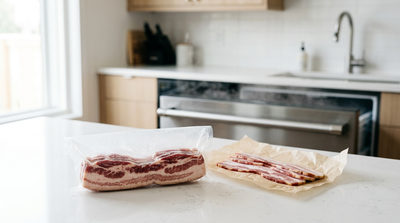
| Cured & Processed Meats (Ham, Bacon, Sausage) | 1 to 2 Weeks (if uncut/vacuum-packaged) | 1 to 2 Months |
2. The Science of Leftovers: Psychrotrophic Pathogens vs. Spoilage Bacteria
To truly master food safety, you must understand what happens to your leftover steak or chicken at a cellular level once it enters the refrigerator. The FDA classifies cooked meat as a TCS Food (Time/Temperature Control for Safety Food). This means the food has three traits bacteria absolutely love: high moisture content, a neutral pH balance, and an incredibly rich nutrient profile. Because cooked meat lacks natural defense mechanisms, it becomes an ideal breeding ground for microorganisms.
Psychrotrophic vs. Mesophilic Bacteria
Not all bacteria behave the same way under thermal stress. Most foodborne bacteria are mesophilic—meaning they thrive in moderate, room-temperature environments and go dormant when exposed to the cold of a refrigerator. However, a specific class of bacteria known as psychrotrophic bacteria (from Greek words meaning "cold-thriving") have evolved cellular membranes that remain fluid in near-freezing temperatures.
The most dangerous psychrotrophic pathogen in your kitchen is Listeria monocytogenes. Unlike Salmonella or E. coli, which stop growing in the fridge, Listeria slowly and silently multiplies at temperatures below 40°F (4°C). This pathogen is the exact reason why the USDA sets a hard limit of 4 days for leftovers. After day four, the Listeria population in the meat can reach infectious levels, posing severe, potentially fatal risks for pregnant women, the elderly, and immunocompromised individuals.
Spore-Forming Pathogens in Cooked Food
Another major threat is Clostridium perfringens. This is a spore-forming bacterium, meaning it can produce a hard, microscopic shield around itself (a spore) to survive extreme environmental stress, including the intense heat of an oven or grill. While the heat kills active, growing bacteria, the spores survive the initial cooking process. If you leave that cooked meat sitting on the counter to cool down for too long, the spores sense the dropping temperature, germinate into active bacteria, and rapidly multiply in the high-protein environment of the meat.
Chemical Degradation: Why Leftovers Lose Their Flavor
Even if you follow all safety protocols, cooked meat eventually tastes stale. This is due to a chemical process called Lipid Oxidation. Meat contains fats (lipids), specifically unsaturated fatty acids. When these fats are exposed to residual oxygen trapped inside your storage container, a chemical reaction occurs that breaks the fats down into volatile organic compounds called aldehydes and ketones. This oxidative breakdown produces what food scientists call "Warmed-Over Flavor" (WOF)—that distinct cardboard, metallic, or stale taste that ruins the culinary experience, even when the meat is biologically perfectly safe to eat.
3. Core Storage Protocols: How to Safely Cool and Store Leftovers
The single most dangerous moment in the lifespan of cooked meat is the transition from the hot stove to the cold refrigerator. Mishandling this cooldown phase is how most residential food poisoning outbreaks occur.
The "Two-Hour Rule" and The Danger Zone
Food safety authorities universally recognize the temperature band between 40°F and 140°F (4°C to 60°C) as The Danger Zone. Within this range, bacterial colonies can double in size every 20 minutes. Because of this exponential growth, you must move cooked meats into refrigeration within 2 hours of preparation. If your kitchen is hot (e.g., during a summer barbecue) and the ambient temperature exceeds 90°F (32°C), this safe window drops to just 1 hour.
Never put a massive, deep pot of hot chili, stew, or a whole uncarved turkey directly into the fridge. Large batches of dense food have a massive thermal mass. The outer edges may cool down quickly, but the core traps heat, preventing convective airflow. It can take over 8 hours for the center of a deep container to drop below 40°F (4°C). This creates a perfect, warm incubator at the center of your leftovers where pathogens will multiply rapidly overnight.
Thermodynamics of Cooling: Step-by-Step Rapid Storage
To safely bridge the gap between hot and cold, you must rely on Evaporative Cooling and Thermal Dissipation. This simply means exposing as much surface area of the food to the cold air as possible, allowing heat to escape rapidly.
- Step 1: Portion for Surface Area. Carve whole birds or large roasts into slices. Divide deep stews or large batches of ground beef into small, shallow containers so the food is no more than 2 inches deep.
- Step 2: Utilize Evaporative Cooling. Leave the storage containers loosely vented in the refrigerator for the first hour. This allows hot steam to escape rather than condensing on the lid and dripping back onto the food.
- Step 3: Seal Tightly. Once the internal temperature of the food has safely dropped below 40°F, seal the containers completely airtight. This deprives spoilage bacteria of oxygen and slows down the lipid oxidation (flavor loss) process.
Many home cooks use vacuum sealers to maximize leftover lifespan. While removing oxygen prevents lipid oxidation and stops aerobic (oxygen-breathing) spoilage bacteria, it creates a completely oxygen-free environment. If your refrigerator fluctuates and rises above 38°F (3.3°C), this exact anaerobic environment is highly favorable for the deadly pathogen Clostridium botulinum. If you vacuum seal leftovers, strict temperature control is absolutely mandatory.
4. Diagnosing Spoilage: Sensory Indicators vs. Invisible Pathogens
Knowing when to discard cooked meat requires understanding the difference between food that looks bad and food that is actually dangerous. These two states are often unrelated.
The Limits of Organoleptic Properties
When you smell, touch, and look at old food, you are assessing its Organoleptic Properties (sensory parameters). The bacteria that cause aesthetic spoilage will alter the smell, create surface slime, and fade the colors of the meat. However, the pathogenic bacteria that cause severe human illness—such as Salmonella, E. coli, and Listeria—are entirely invisible.
The Golden Rule of Food Safety: Pathogens do not produce bad smells, off-colors, or sour tastes. A piece of cooked chicken stored for six days might smell completely normal, look perfectly fine, and taste great, while simultaneously containing a massive, illness-inducing load of Listeria.
Observable Signs of Spoilage
If you observe any of the following organoleptic changes before the 4-day mark, the meat has succumbed to rapid spoilage bacteria and must be discarded immediately:
- Texture: A tacky, sticky, or slimy film on the surface indicates advanced bacterial colonization.
- Odor: A sharp, sour, ammonia-like, or overly sweet yeast smell.
- Visual: Loss of luster, a dull gray or green tint, or any visible mold colonies. Mold on meat branches deep into the protein structure; you cannot simply cut the moldy piece off.
The "When in Doubt" Threshold
Because you cannot detect lethal pathogens with your senses, you need a strict, unbendable rule for discarding food. If the cooked meat has been in the refrigerator for 5 days or longer, it must go in the trash. Do not taste it, do not smell it, do not feed it to a pet. The risk heavily outweighs the culinary reward.
5. Reheating Rules: Demystifying Pathogens and Heat-Stable Toxins
A persistent and dangerous myth in home kitchens is the belief that "reheating destroys everything." Many consumers believe that if a piece of meat has been sitting in the fridge for a week, simply blasting it in the microwave or boiling it will render it perfectly safe. This is biologically false.
The Threat of Staphylococcal Enterotoxin
While proper thermal reheating will definitively destroy live, vegetative bacteria cells like Salmonella, it cannot deactivate certain heat-stable toxins left behind by bacteria. If meat was handled poorly (e.g., left in the Danger Zone too long) and contaminated by bacteria like Staphylococcus aureus, those bacteria multiply and produce a toxic byproduct called a Staphylococcal Enterotoxin.
This toxin is a chemical poison that can withstand boiling temperatures (212°F / 100°C) for over 30 minutes. Therefore, even if you cook the spoiled meat to a blackened crisp, killing every living cell, the chemical toxin remains completely intact and will still cause severe food poisoning upon consumption.
Safe Reheating Protocols
When you are reheating leftovers that have been safely stored within the 3-to-4-day window, you must follow the USDA protocol to ensure any minor surface bacteria are eliminated:
- Use a Thermometer: Reheat all solid leftovers to a verified internal temperature of 165°F (74°C) using a calibrated digital food thermometer.
- Boil Liquids: Any leftover sauces, stews, or gravies containing meat must be brought to a full, rolling boil.
- Avoid Slow Cookers: Never use a slow cooker, crockpot, or chafing dish to reheat cold leftovers from the fridge. These appliances heat up far too slowly, keeping the food trapped in the Danger Zone for hours. Always reheat food rapidly on the stovetop, in an oven, or in a microwave before transferring it to a slow cooker to hot-hold for a party.
6. "Longevity Lab" Pro-Tips: Advanced Methods for Safe Meal Prepping
If you regularly prep a week's worth of lunches on a Sunday, standard safety advice might leave you scrambling by Thursday. Here are advanced, data-backed techniques to maximize both the safety and quality of your protein storage.
- Calibrate Your Appliance: The safety guidelines assume your fridge runs perfectly. In reality, during summer months or when overloaded, internal temperatures frequently drift above 40°F (4°C). Purchase an inexpensive, dedicated liquid-buffered refrigerator thermometer. Place it on the middle shelf and adjust your appliance settings to maintain a constant baseline of 35°F to 38°F (1.6°C to 3.3°C).
- Thermal Shock Management: Avoid putting roaring-hot cast iron pans or massive glass casserole dishes straight into the fridge. The radiant heat will temporarily raise the ambient air temperature inside the appliance, placing neighboring foods (like raw eggs or dairy) into the Danger Zone. Pre-chill heavy pots in an ice bath in the sink for 15 minutes before refrigerating.
- Implement FIFO and Date-Labeling: Treat your domestic fridge like a commercial kitchen. "First-In, First-Out" (FIFO) prevents old food from getting pushed to the back. Keep a roll of painter's tape and a permanent marker in your kitchen drawer and clearly write the preparation date on every container.
7. Frequently Asked Questions (People Also Ask)
Can you eat cooked meat after 5 days in the fridge?
No. Consuming cooked meat stored for 5 days or longer is strictly not recommended. Even if the meat smells and looks completely fresh, dangerous psychrotrophic pathogens like Listeria monocytogenes can slowly multiply at safe refrigeration temperatures. After 4 days, the bacterial load can reach levels that pose a significant food safety risk.
Does reheating cooked meat kill bacteria?
Reheating cooked meat to a verified internal temperature of 165°F (74°C) effectively kills active, vegetative bacteria like Salmonella and E. coli. However, it does not destroy heat-stable toxins (such as Staphylococcal Enterotoxin) or bacterial spores that may have developed if the food was stored improperly or left at room temperature for too long. Reheating cannot make spoiled food safe again.
How can you tell if cooked meat has gone bad?
Observable signs of rapid spoilage include a sour or ammonia-like smell, a slimy or sticky surface texture, and a gray, green, or faded appearance. However, the pathogenic bacteria that cause severe food poisoning are entirely invisible and odorless. Because you cannot taste or smell these dangerous pathogens, you must adhere to the 4-day disposal rule regardless of the meat's perfect physical appearance.
How do you store cooked meat to make it last longer?
To maximize leftover shelf life, divide warm cooked meat into shallow containers so it cools rapidly, seal it in airtight containers to prevent lipid oxidation, and place it in a refrigerator manually calibrated to stay below 38°F (3.3°C). If you know you will not consume the meat within 4 days, portion the leftovers into heavy-duty freezer bags or vacuum-seal them and freeze immediately.
8. Official Sources and Food Safety Standards
- United States Department of Agriculture (USDA) Food Safety and Inspection Service (FSIS): Leftovers and Food Safety Guidelines (Establishes the authoritative 3-to-4 day refrigeration standard and Danger Zone metrics).
- Food and Drug Administration (FDA): FDA Food Code Chapter 3: Limitation of Growth of Pathogens on TCS Food (Outlines commercial TCS food parameters and pathogenic growth models).
- Centers for Disease Control and Prevention (CDC): CDC Food Safety and Prevention Outreach (Provides epidemiological data regarding outbreaks linked to improper cooling practices and spore-forming pathogens like Clostridium perfringens).

David Mercer is the Lead Analyst at ProductLifespans.com. With over 10 years of hands-on experience reviewing hardware durability, home appliance mechanics, and total-cost-of-ownership economics, David specializes in translating complex manufacturer specs into practical repair-vs-replace guidance. When he isn't analyzing lifecycle data, he's testing consumer equipment durability in his home workshop.